EN
All hadiths
The complete card collection, filter by chapter
The Noble Qur'an and Qur'anic Sciences
26
The Hadith and Hadith Sciences
3
The Creed
135
Jurisprudence and Juristic Principles
288
Virtues and Manners
288
Da‘wah and Hisbah
15
Seerah and History
38
655 hadiths
Anas ibn Mālik (may Allah be pleased with him) reported that the Prophet (may Allah's peace and blessings be upon him) said: "Allah is happier with the repentance of His slave than one of you is with finding his riding camel after having lost it in a desert." Another narration reads: "Verily, Allah is happier with the repentance of His slave when he turns in repentance to Him than one of you who was on his camel in a desert and it got lost and was carrying his provision of food and drink. He, having lost all hope (of finding it), lies down in the shade of a tree feeling hopeless; when all of a sudden he finds it (his camel) standing before him. He takes hold of its reins and then out of boundless joy blurts out: 'O Allah, You are my slave and I am Your Lord!' He makes this mistake out of extreme joy."
Narrated by Bukhari & Muslim
Abu Mūsa (may Allah be pleased with him) reported that the Prophet (may Allah's peace and blessings be upon him) said: "Verily, Allah Almighty extends His Hand during the night so the sinner of the day may repent, and He extends His Hand during the day so the sinner of the night may repent until the sun rises from its west."
Narrated by Muslim
Abu Sa‘īd al-Khudri (may Allah be pleased with him) reported: I heard the Messenger of Allah (may Allah's peace and blessings be upon him) say: "Whoever fasts a day in the way of Allah, Allah will keep his face away from the Fire seventy falls."
Agreed upon
Sahl ibn Sa‘d (may Allah be pleased with him) reported that the Messenger of Allah (may Allah's peace and blessings be upon him) said: "People will continue to be good as long as they hasten to break the fast."
Agreed upon
Zayd ibn Thābit (may Allah be pleased with him) reported: We had Suhūr (pre-dawn meal) with the Prophet (may Allah's peace and blessings be upon him), and then he stood for prayer. I said: How long was the time between Adhān and Suhūr? He said: The time it takes to recite fifty verses.
Agreed upon
‘Ā’ishah, Mother of the Believers (may Allah be pleased with her) and wife of the Prophet (may Allah's peace and blessings be upon him) reported: The Prophet (may Allah's peace and blessings be upon him) used to practice I‘tikāf (seclusion for worship) during the last ten of Ramadan until he died. Then his wives observed I‘tikāf after him.
Agreed upon
Anas ibn Mālik (may Allah be pleased with him) reported: The Prophet (may Allah's peace and blessings be upon him) said: "Have Sahūr (pre-dawn meal) for, indeed, there is a blessing in Sahūr."
Agreed upon
Jābir ibn ‘Abdullah (may Allah be pleased with him) reported: The Messenger of Allah (ﷺ) was on a journey and saw a crowd of people, and a man was being shaded (by them). He asked: "What is the matter with that (man)?" They said: He is fasting. Thereupon, he said: "It is not from righteousness to fast while traveling." In another version by Muslim, he said: "Take advantage of the concession that Allah has granted you."
Agreed upon
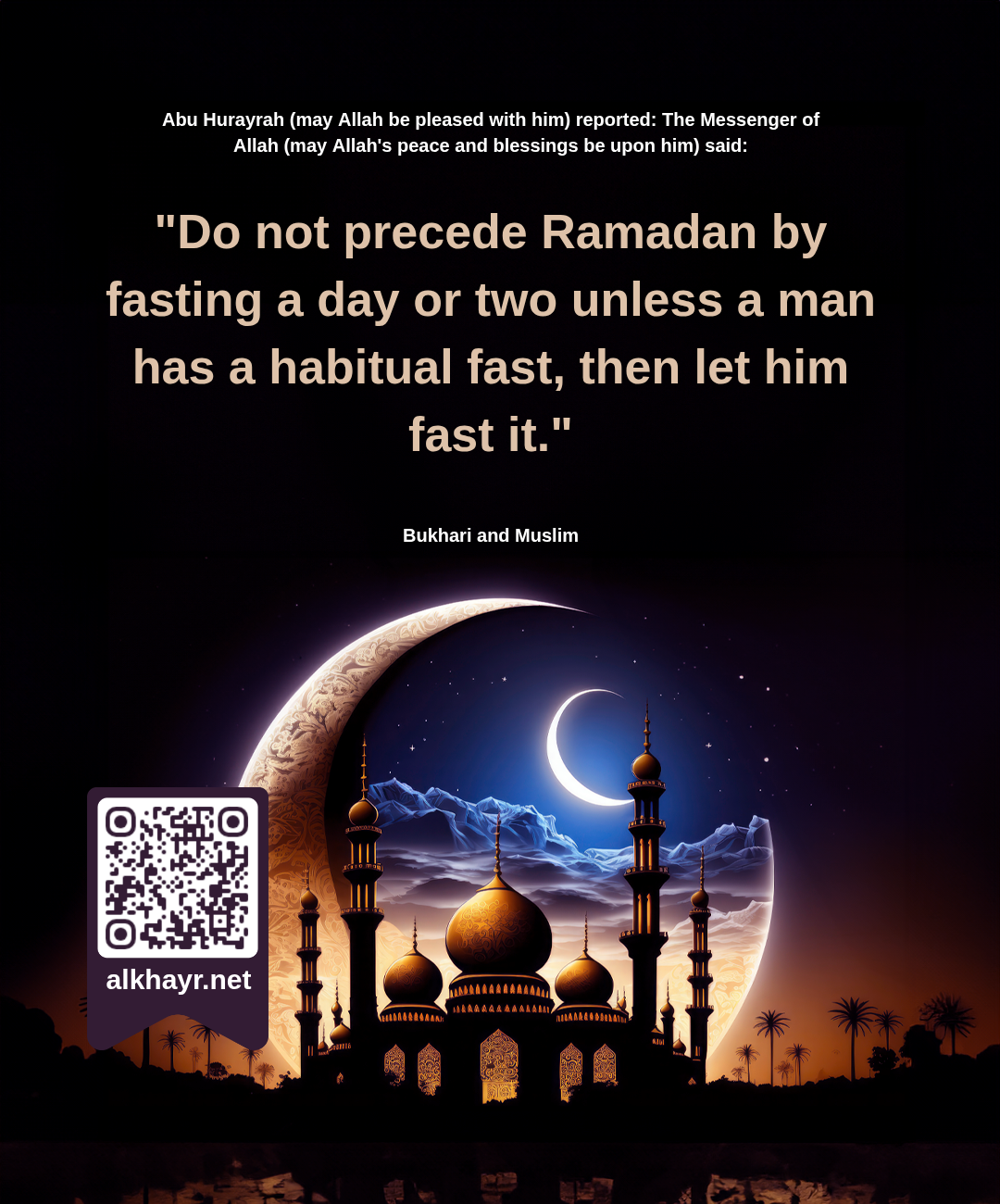
Abu Hurayrah (may Allah be pleased with him) reported: The Messenger of Allah (may Allah's peace and blessings be upon him) said: "Do not precede Ramadan by fasting a day or two unless a man has a habitual fast, then let him fast it."
Agreed upon
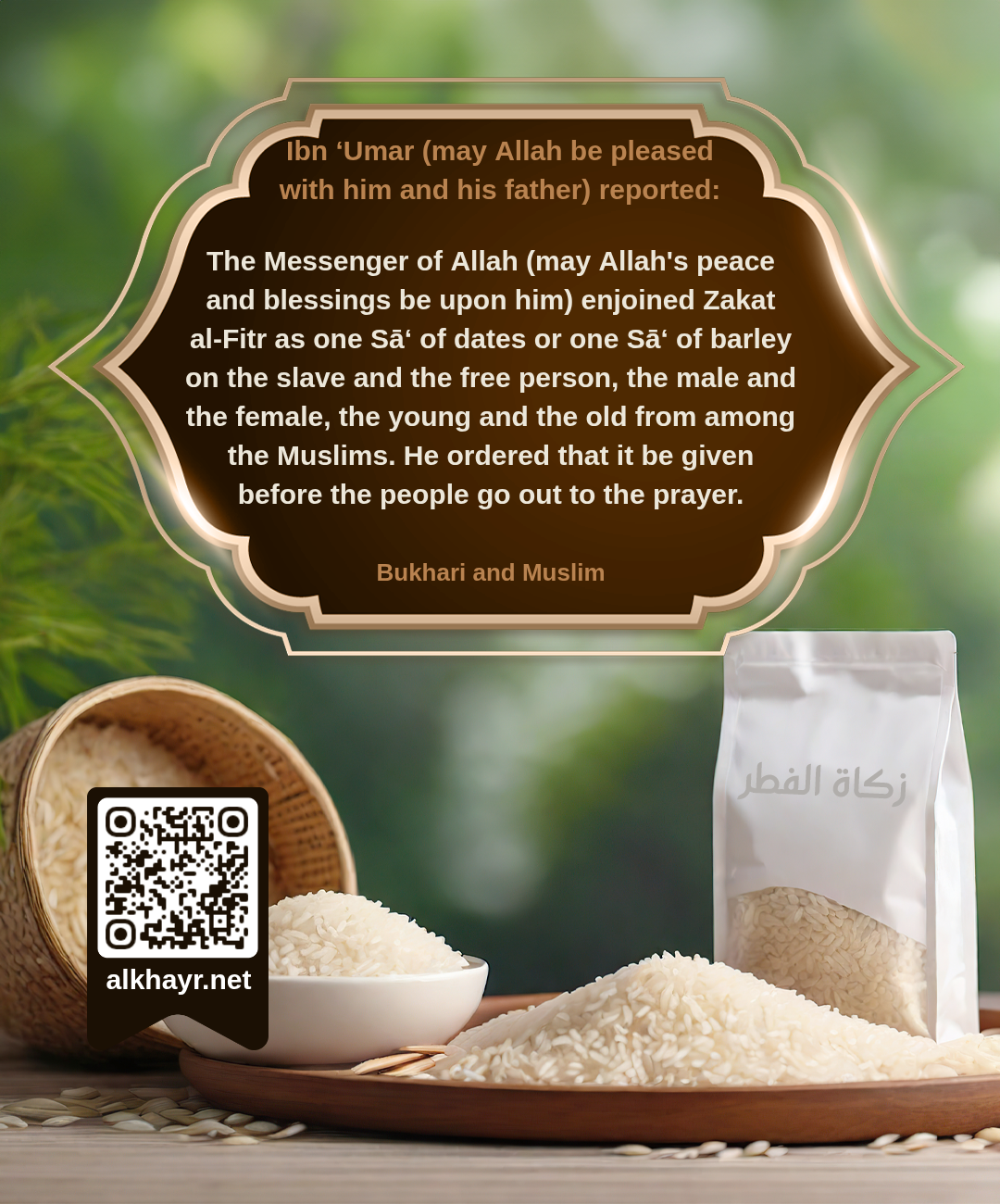
Ibn ‘Umar (may Allah be pleased with him and his father) reported: The Messenger of Allah (may Allah's peace and blessings be upon him) enjoined Zakat al-Fitr as one Sā‘ of dates or one Sā‘ of barley on the slave and the free person, the male and the female, the young and the old from among the Muslims. He ordered that it be given before the people go out to the prayer.
Agreed upon
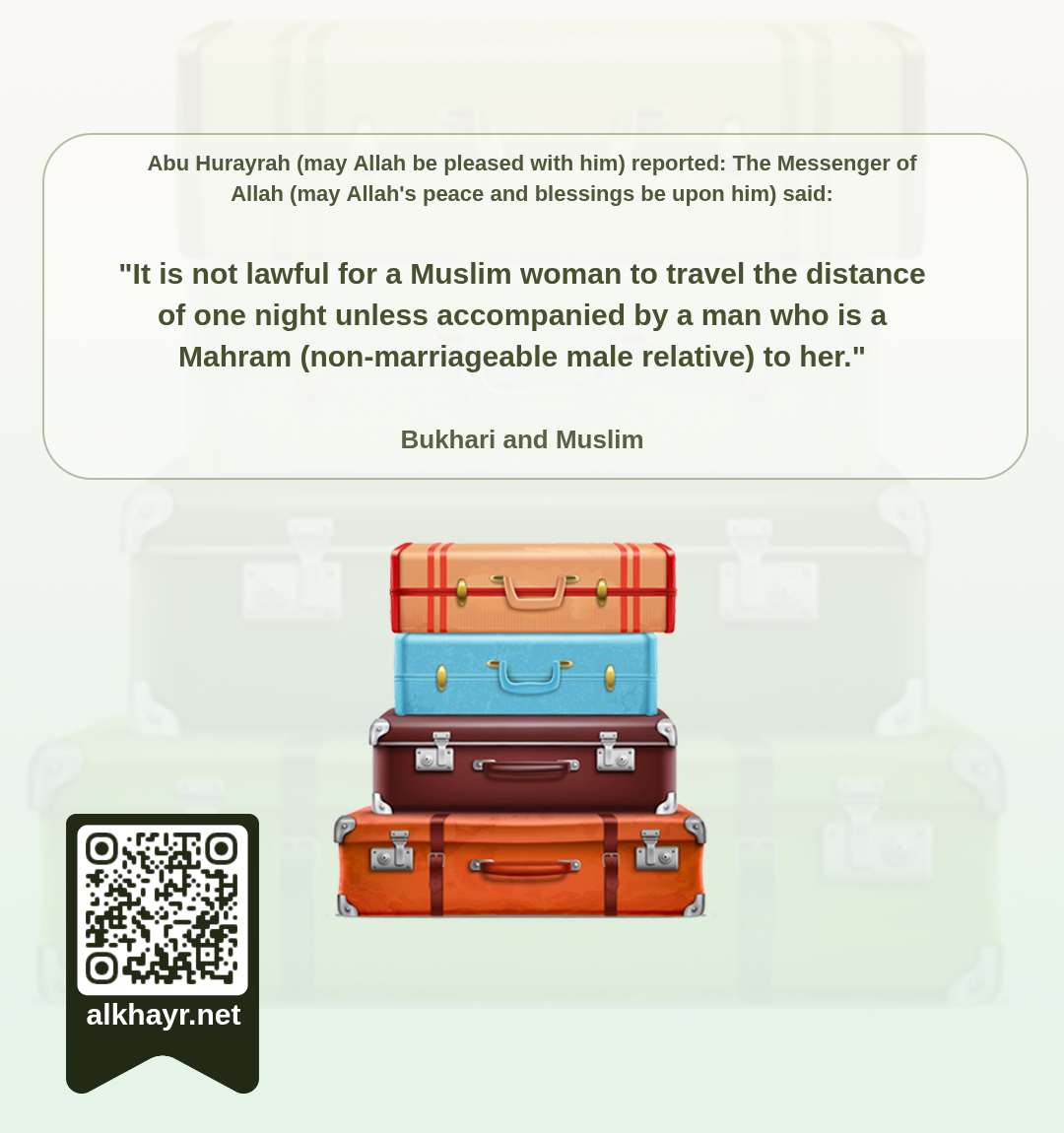
Abu Hurayrah (may Allah be pleased with him) reported: The Messenger of Allah (may Allah's peace and blessings be upon him) said: "It is not lawful for a Muslim woman to travel the distance of one night unless accompanied by a man who is a Mahram (non-marriageable male relative) to her."
Agreed upon
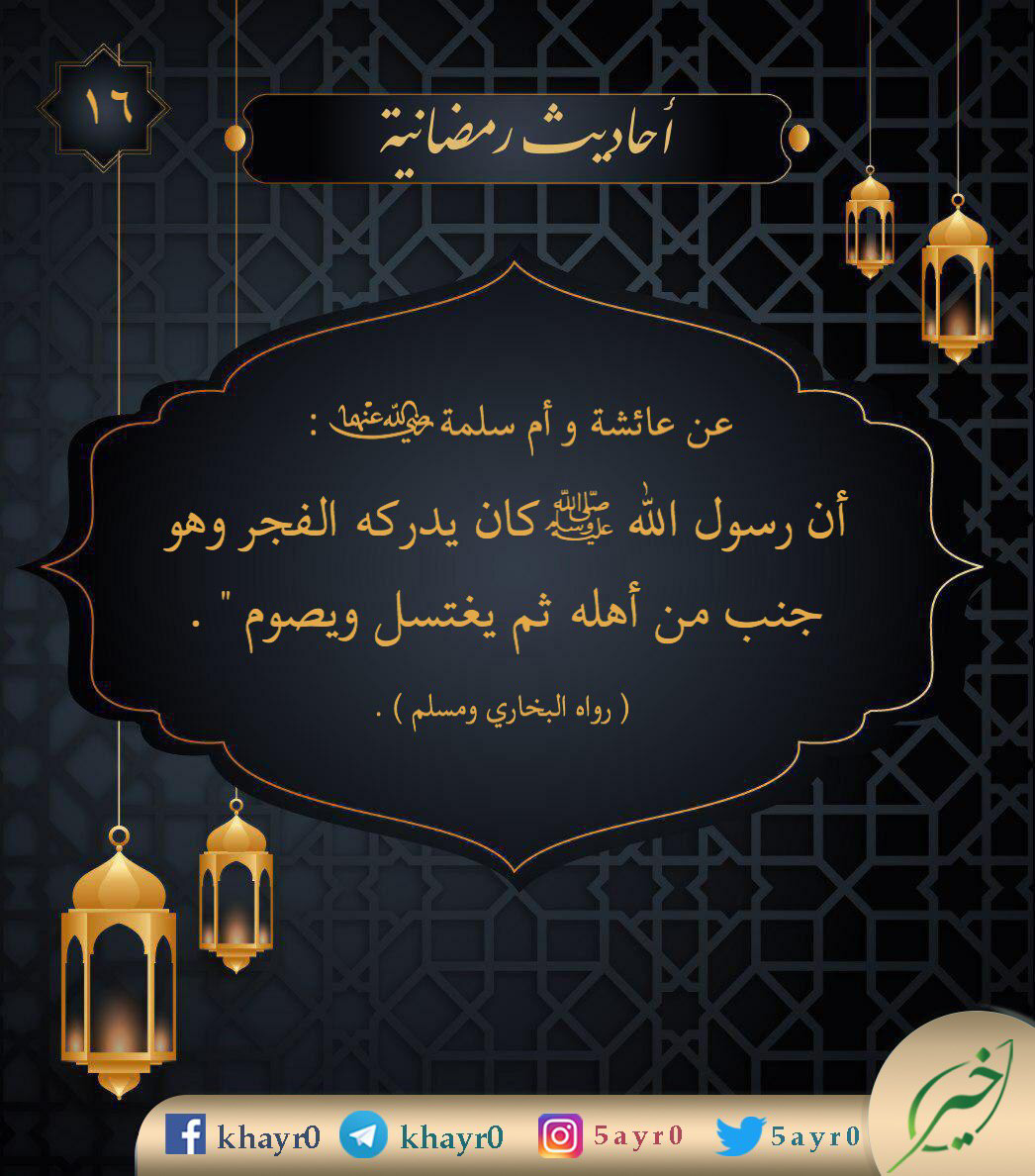
‘Ā'ishah and Umm Salāmah (may Allah be pleased with both of them) reported: The Messenger of Allah (may Allah's peace and blessings be upon him) would sometimes get up at the time of Fajr while in a state of Janābah after having sexual intercourse with his wives, then he would take a ritual bath and fast.
Narrated by Bukhari & Muslim
Abu Hurayrah (may Allah be pleased with him) reported: The Messenger of Allah (may Allah's peace and blessings be upon him) said: "Whoever forgets while fasting and eats or drinks, let him complete his fast, for it is Allah Who fed him and gave him drink."
Agreed upon
Abu Hurayrah (may Allah be pleased with him) reported: My close friend (may Allah's peace and blessings be upon him) advised me with three: fasting three days of every month, the two Rak‘ahs of Duha, and performing Witr before I sleep."
Agreed upon
‘Ā’ishah (may Allah be pleased with her) reported that the Messenger of Allah (may Allah's peace and blessings be upon him) said: "Seek out the Night of Qadr (Decree) in the odd nights of the last ten of Ramadan."
Agreed upon
‘Umar ibn al-Khattāb (may Allah be pleased with him) reported: The Messenger of Allah (may Allah’s peace and blessings be upon him) said: "When the night approaches from this side, and the day retreats from that side, then it is time for the fasting person to break his fast."
Narrated by Bukhari & Muslim
Ibn ‘Umar (may Allah be pleased with him and his father) reported: I heard the Messenger of Allah (may Allah's peace and blessings be upon him) say: "Fast when you see it, and break the fast when you see it, but if the sky is overcast and you cannot see it, then act on estimation."
Agreed upon
Abu Hurayrah (may Allah be pleased with him) reported: The Messenger of Allah (may Allah's peace and blessings be upon him) said: "Indeed, Allah does not look at your appearance and wealth, but He looks at your hearts and deeds.”
Narrated by Muslim
‘Umar ibn al-Khattāb (may Allah be pleased with him) reported: The Messenger of Allah (may Allah’s peace and blessings be upon him) said: "Verily, the reward of deeds depends on the intention, and a person will be rewarded according to what he intended. So, he whose migration is for the sake of Allah and His Messenger, then his migration is for the sake of Allah and His Messenger, and he whose migration is to achieve some worldly gain or take some woman in marriage, then his migration is for what he migrated for." In a version by Al-Bukhāri: "Verily, the reward of deeds depends on the intentions, and each person will be rewarded according to what he intended."
Agreed upon
Abu al-Hawrā’ as-Sa‘di reported: I said to Al-Hasan ibn ‘Ali (may Allah be pleased with him and his father): What did you memorize from the Messenger of Allah (may Allah's peace and blessings be upon him)? He said: I memorized from the Messenger of Allah (may Allah's peace and blessings be upon him): "Leave what you doubt for what you do not doubt; indeed, truthfulness is tranquility, and lying is doubt."
Narrated by At-Tirmidhi, An-Nasā’i, and Ahmad
Abu Hurayrah (may Allah be pleased with him) reported that the Messenger of Allah (may Allah's peace and blessings be upon him) said: "A man's prayer in congregation is twenty-something degrees higher than his prayer in his house and market. When one performs ablution and perfects it, then goes out to the mosque, nothing motivates him except prayer and seeking nothing but prayer. For every step he takes, he is raised one degree and one sin is erased for him until he enters the mosque. When he enters the mosque, he remains in prayer as long as prayer is what keeps him therein. The angels will keep invoking the blessings of Allah on you as long as you are in the place where you performed prayer, saying: 'O Allah, have mercy on him! O Allah, forgive him! O Allah, accept his repentance!' as long as you do not harm anyone therein and do not break your ablution."
Agreed upon
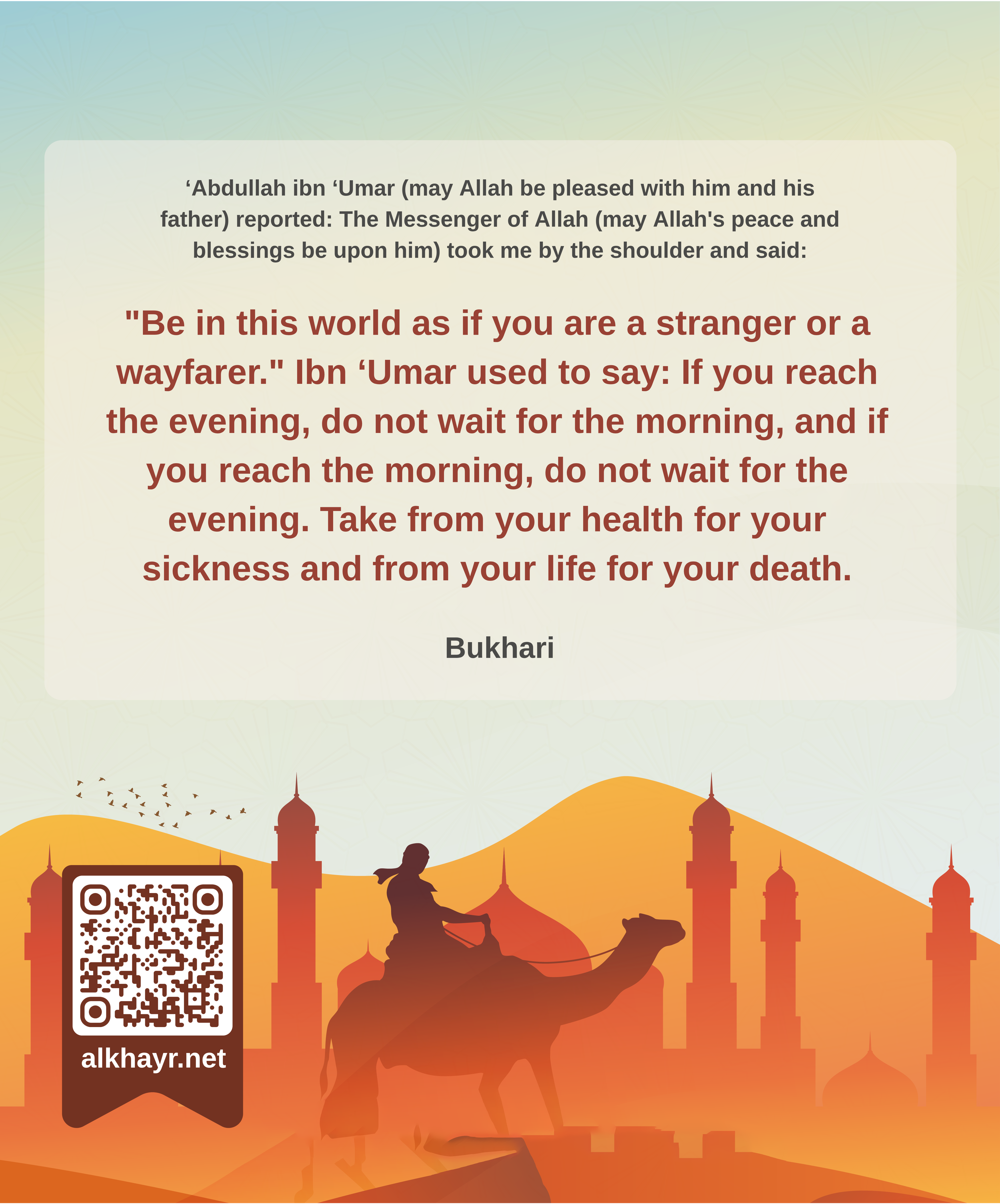
‘Abdullah ibn ‘Umar (may Allah be pleased with him and his father) reported: The Messenger of Allah (may Allah's peace and blessings be upon him) took me by the shoulder and said: "Be in this world as if you are a stranger or a wayfarer." Ibn ‘Umar used to say: If you reach the evening, do not wait for the morning, and if you reach the morning, do not wait for the evening. Take from your health for your sickness and from your life for your death.
Narrated by Al-Bukhāri
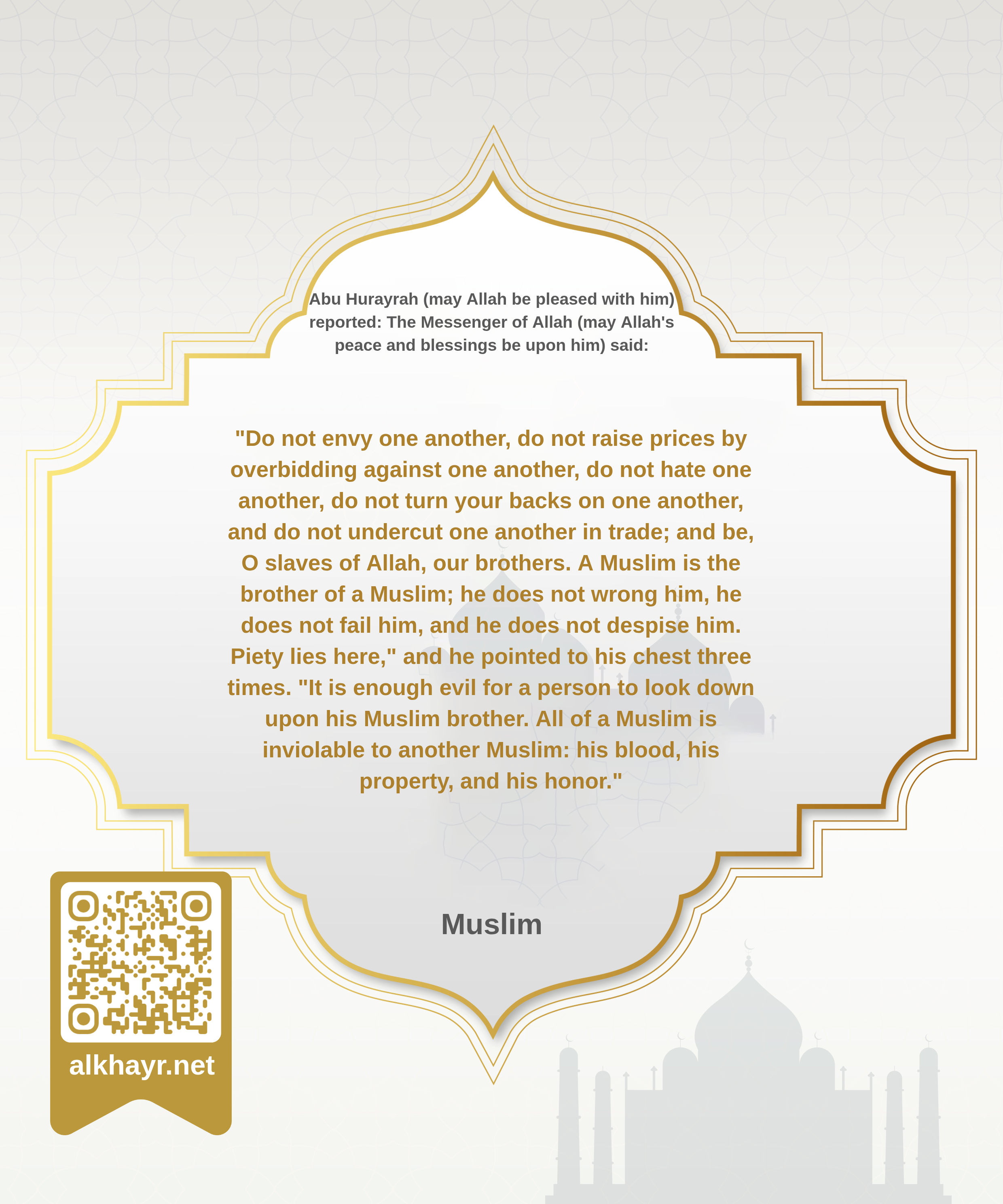
Abu Hurayrah (may Allah be pleased with him) reported: The Messenger of Allah (may Allah's peace and blessings be upon him) said: "Do not envy one another, do not raise prices by overbidding against one another, do not hate one another, do not turn your backs on one another, and do not undercut one another in trade; and be, O slaves of Allah, our brothers. A Muslim is the brother of a Muslim; he does not wrong him, he does not fail him, and he does not despise him. Piety lies here," and he pointed to his chest three times. "It is enough evil for a person to look down upon his Muslim brother. All of a Muslim is inviolable to another Muslim: his blood, his property, and his honor."
Narrated by Muslim
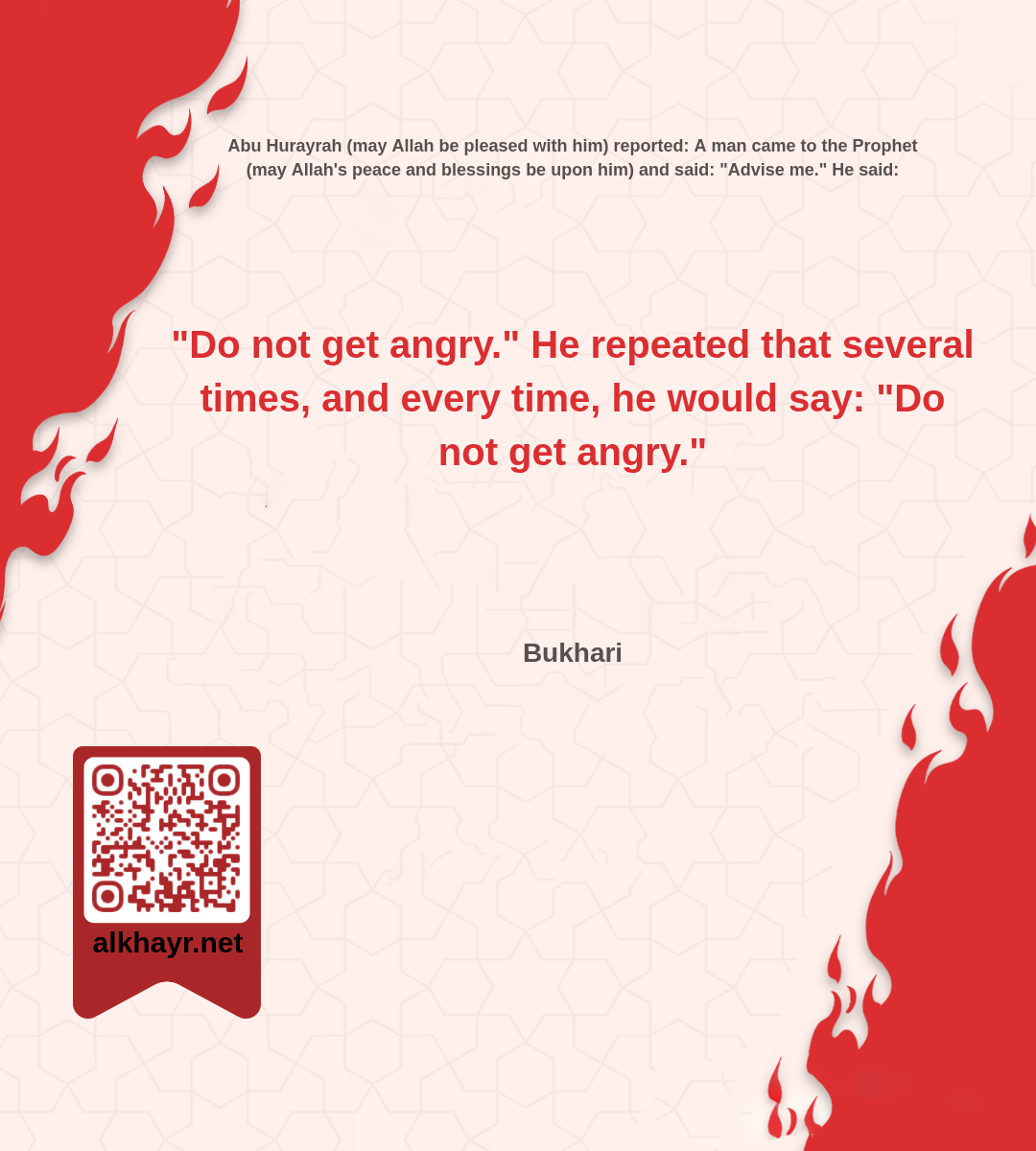
Abu Hurayrah (may Allah be pleased with him) reported: A man came to the Prophet (may Allah's peace and blessings be upon him) and said: "Advise me." He said: "Do not get angry." He repeated that several times, and every time, he would say: "Do not get angry."
Narrated by Al-Bukhāri
Previous page
Page 9 of 28
Next page