EN
Jurisprudence and Juristic Principles
Jurisprudence of Transactions
17 hadiths
Sales
4
Usury
1
Loan
4
Conciliation and Neighborhood Rulings
2
الإجارة
1
Endowment
1
Gift
1
Oaths and Vows
3
17 hadiths
Ibn ‘Umar (may Allah be pleased with him) reported: The Prophet (may Allah's peace and blessings be upon him) forbade vowing and said: "Indeed, it does not bring any good; rather it is only a means to extract something from the miser."
Agreed upon
Thābit ibn Ad-Dahhāk (may Allah be pleased with him) reported: I gave an oath of allegiance to the Messenger of Allah (may Allah's peace and blessings be upon him) under the tree. Then, the Messenger (may Allah's peace and blessings be upon him) said: "If anyone swears by a religion other than Islam falsely and intentionally, he is as he has said. If anyone kills himself with something, he will be punished with it on the Day of Judgment. A man cannot make a vow on something that he does not possess." Another narration reads: "Cursing a believer is like killing him." A third narration stipulates: "If anyone makes a false claim to an increase of something, Allah, the Exalted and Glorified, will only give him a decrease."
Narrated by Bukhari & Muslim
Abu Hurayrah (may Allah be pleased with him) reported: A man came to the Prophet (may Allah's peace and blessings be upon him) demanding repayment of a loan in such a rude manner that vexed the Companions and they were about to harm him, but the Messenger of Allah (may Allah's peace and blessings be upon him) said: "Leave him, for he who has a right is entitled to demand it. Give him a camel of the same age as his." They said: "O Messenger of Allah, we found none but older than his." He said: "Give it to him, for the best among you are those who settle their debts in the best manner."
Narrated by Bukhari & Muslim
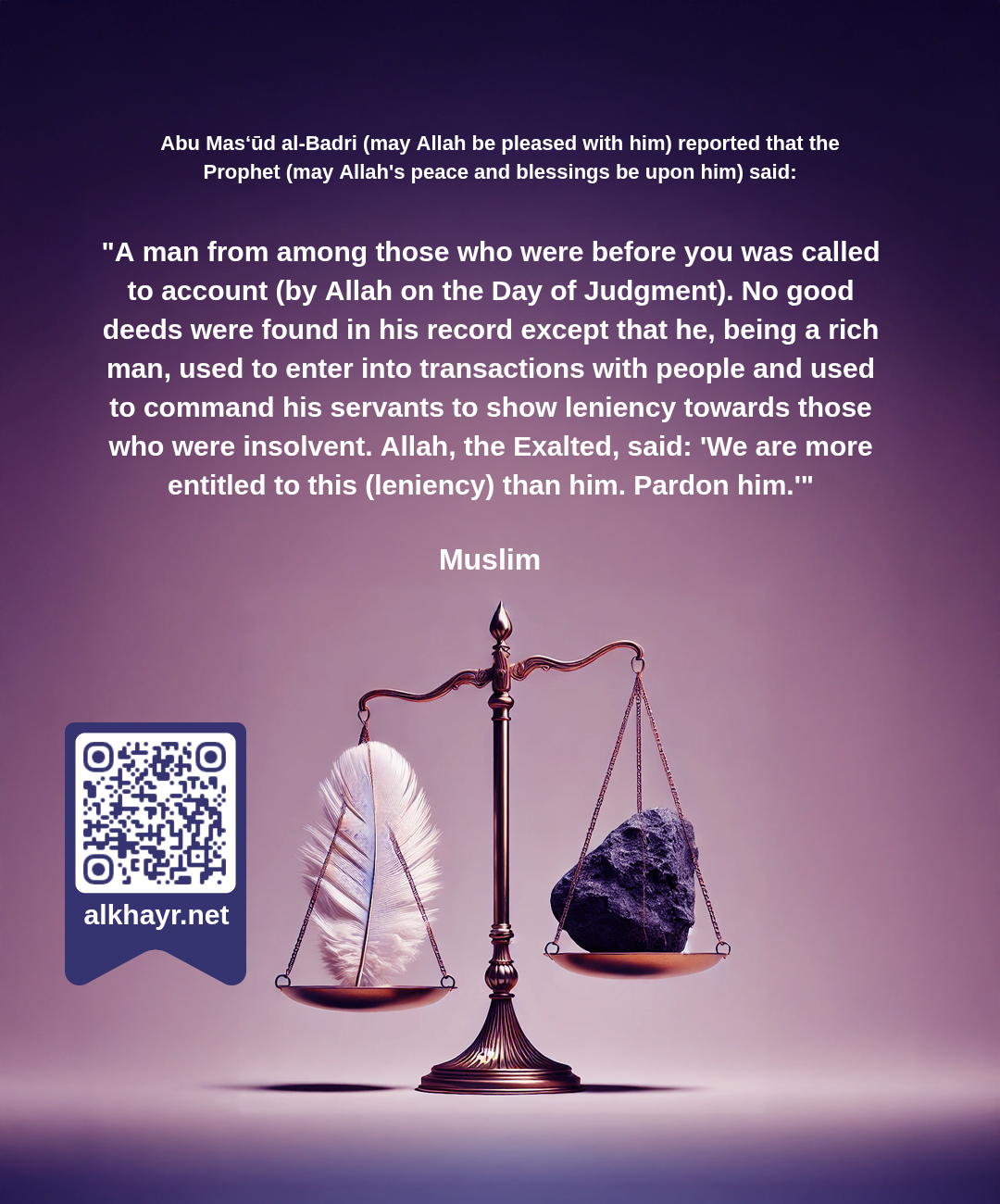
Abu Mas‘ūd al-Badri (may Allah be pleased with him) reported that the Prophet (may Allah's peace and blessings be upon him) said: "A man from among those who were before you was called to account (by Allah on the Day of Judgment). No good deeds were found in his record except that he, being a rich man, used to enter into transactions with people and used to command his servants to show leniency towards those who were insolvent. Allah, the Exalted, said: 'We are more entitled to this (leniency) than him. Pardon him.'"
Narrated by Muslim
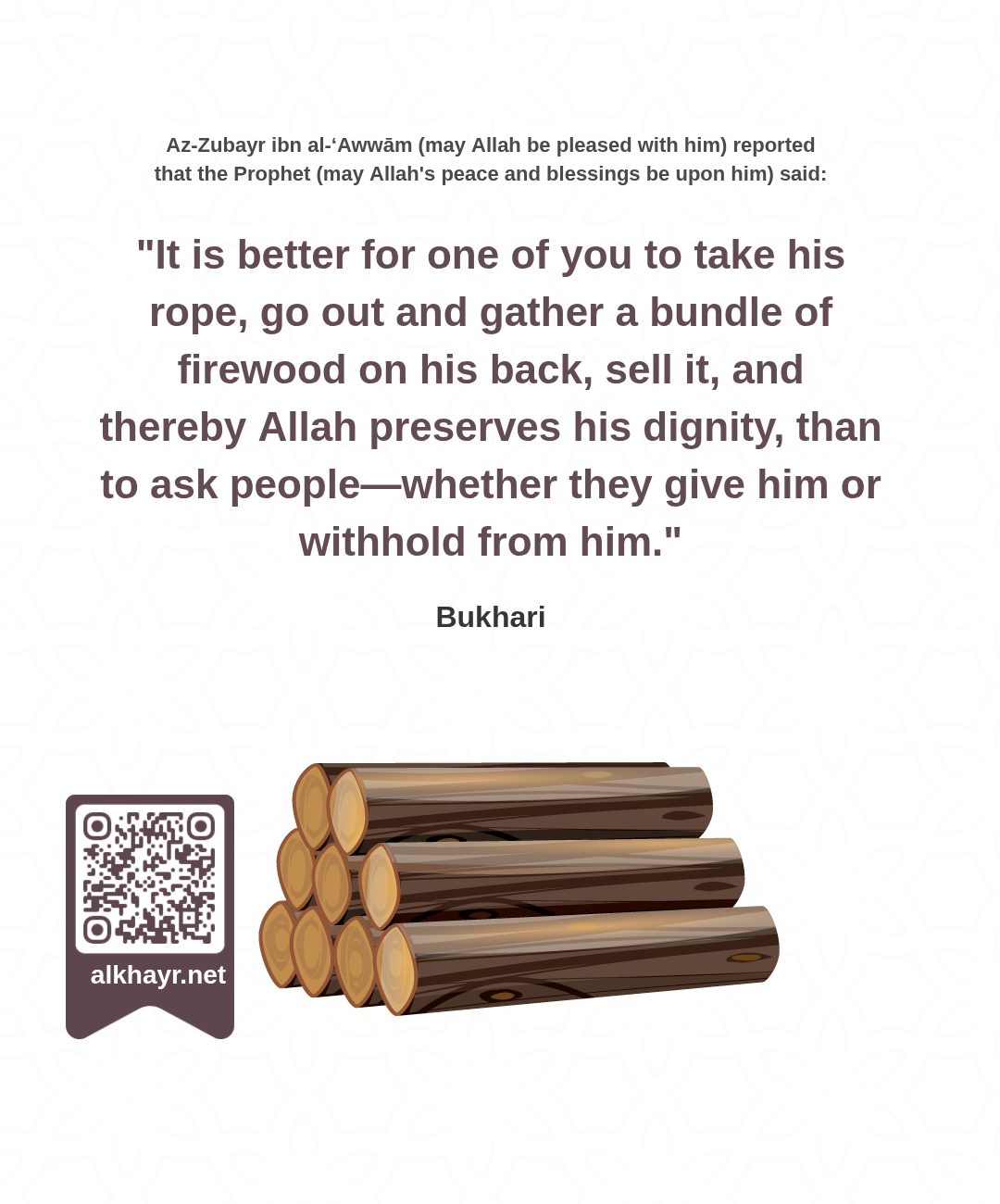
Az-Zubayr ibn al-‘Awwām (may Allah be pleased with him) reported that the Prophet (may Allah's peace and blessings be upon him) said: "It is better for one of you to take his rope, go out and gather a bundle of firewood on his back, sell it, and thereby Allah preserves his dignity, than to ask people—whether they give him or withhold from him."
Narrated by Al-Bukhāri
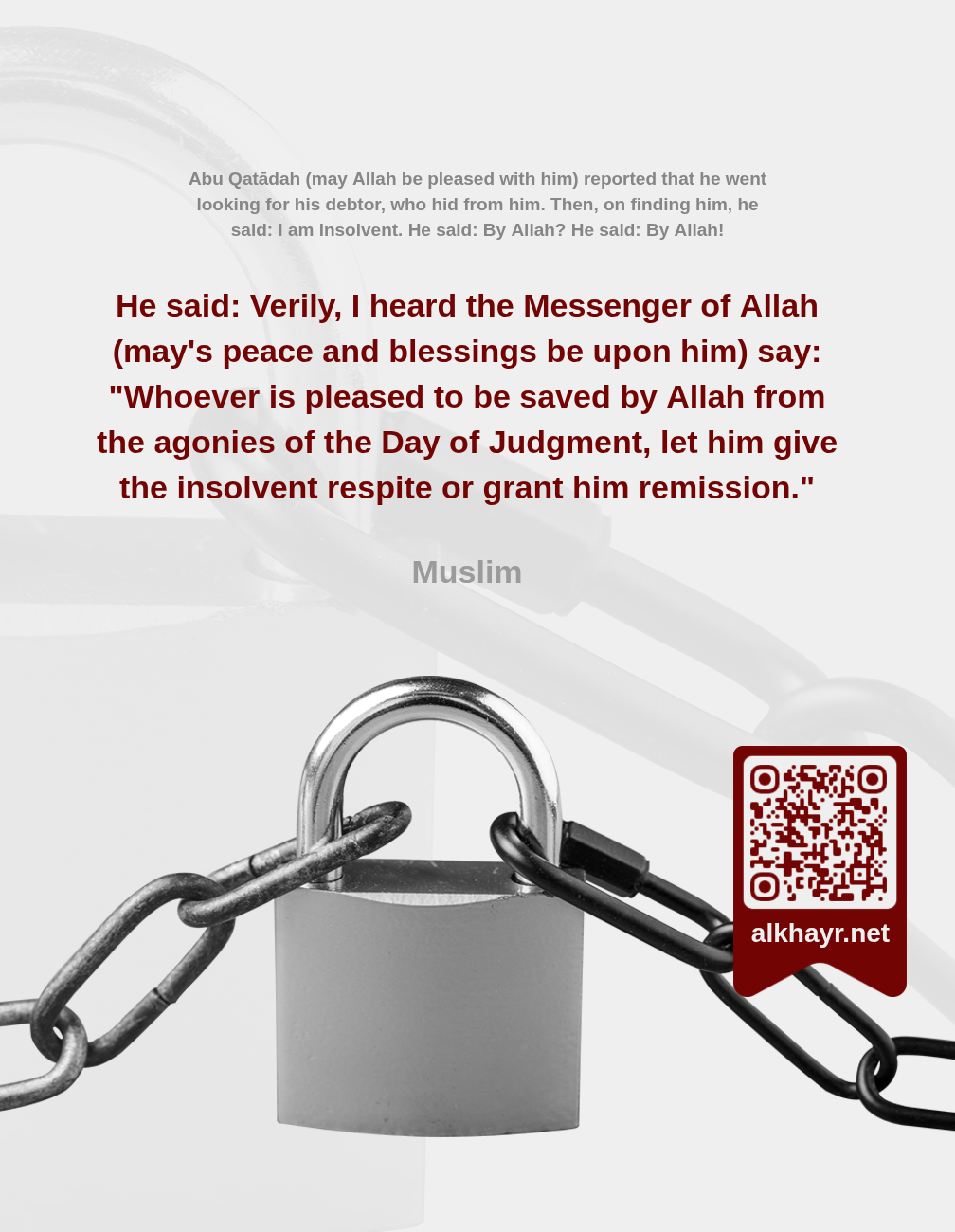
Abu Qatādah (may Allah be pleased with him) reported that he went looking for his debtor, who hid from him. Then, on finding him, he said: I am insolvent. He said: By Allah? He said: By Allah! He said: Verily, I heard the Messenger of Allah (may Allah's peace and blessings be upon him) say: "Whoever is pleased to be saved by Allah from the agonies of the Day of Judgment, let him give the insolvent respite or grant him remission."
Narrated by Muslim
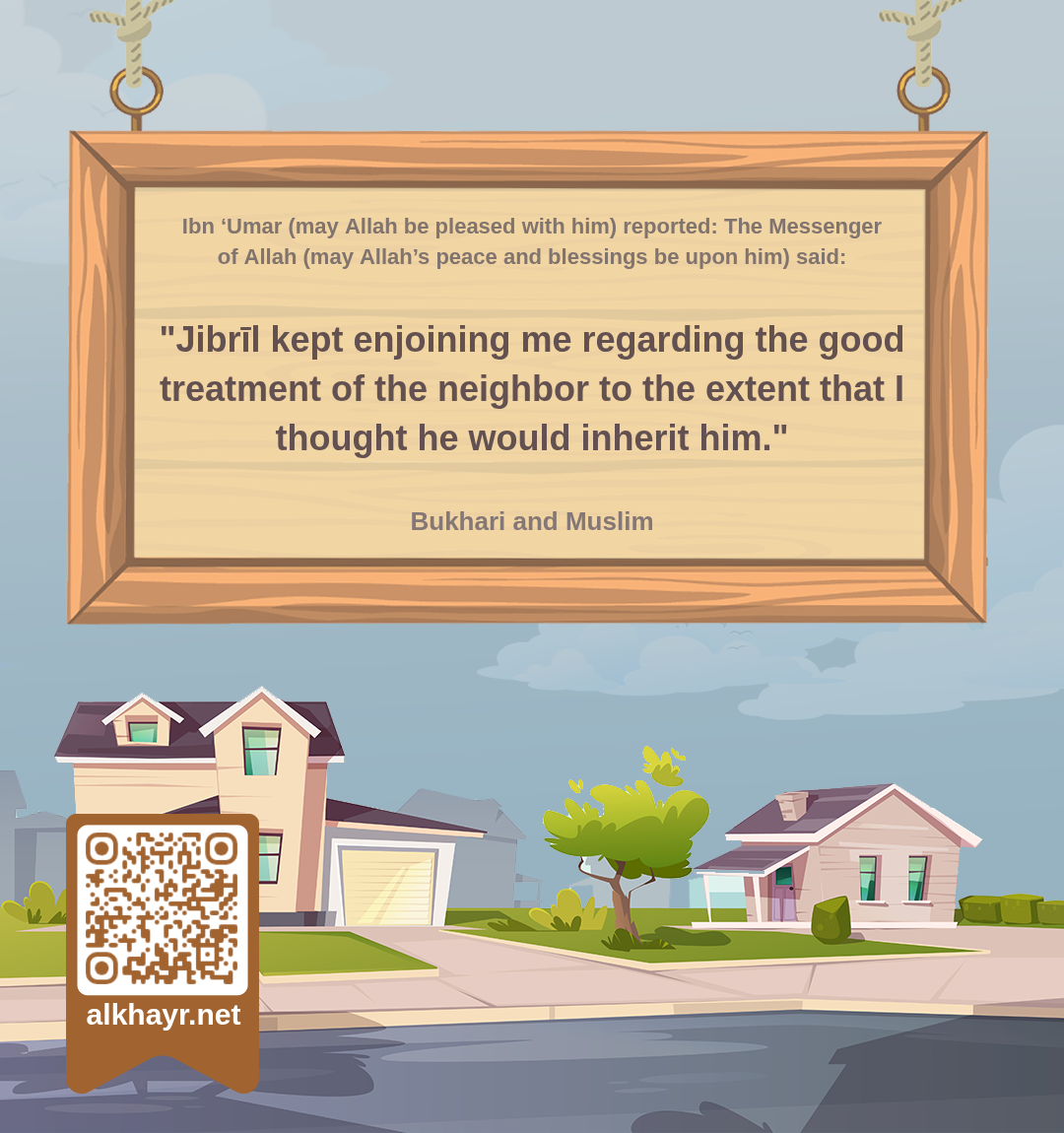
Ibn ‘Umar (may Allah be pleased with him) reported: The Messenger of Allah (may Allah’s peace and blessings be upon him) said: "Jibrīl kept enjoining me regarding the good treatment of the neighbor to the extent that I thought he would inherit him."
Agreed upon
Abu Qatādah (may Allah be pleased with him) reported that he heard the Messenger of Allah (may Allah's peace and blessings be upon him) say: "Beware of excessive swearing (by Allah) in sale transactions, for it sells (the goods) then erases (the blessing)."
Narrated by Muslim
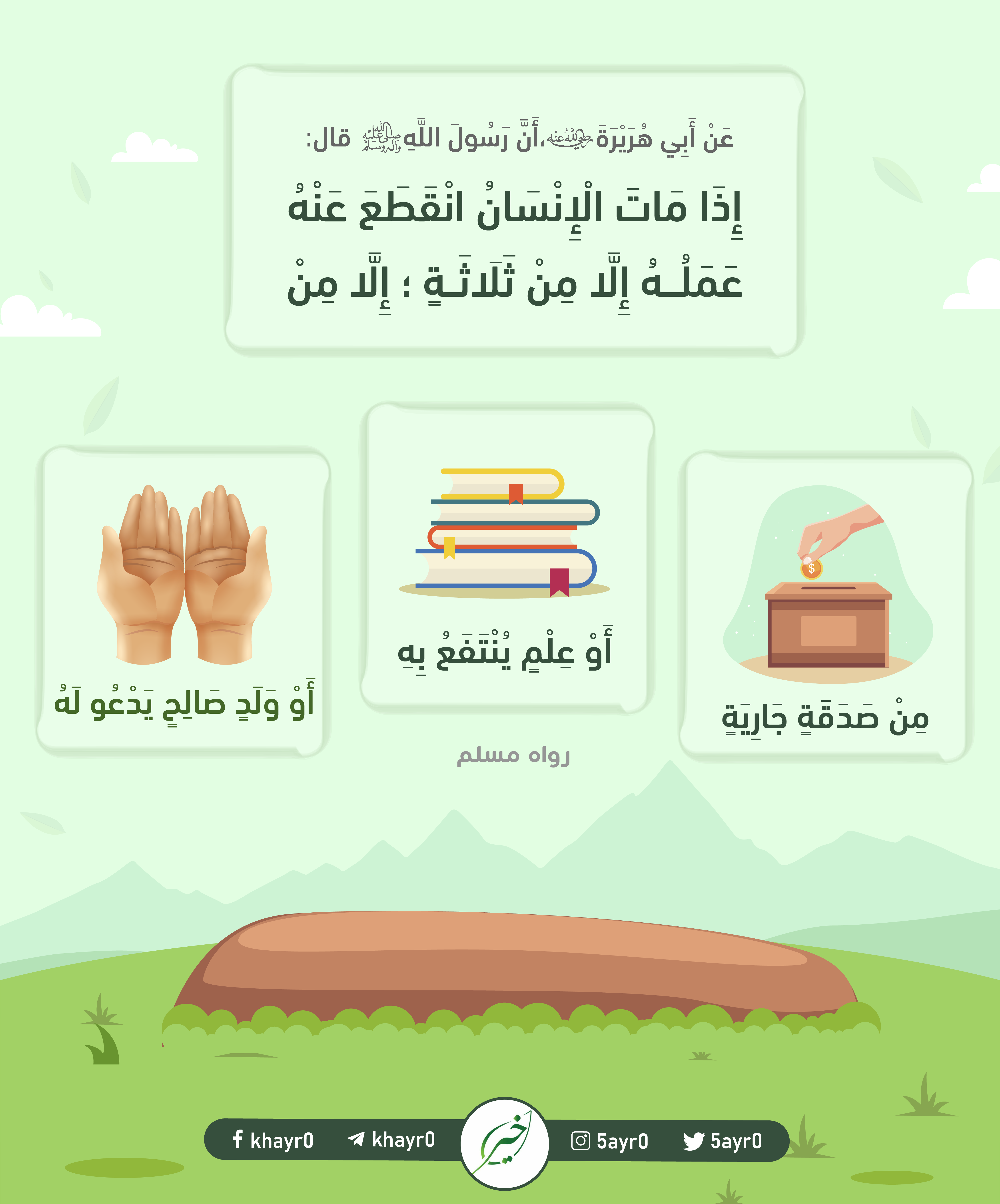
Abu Hurayrah (may Allah be pleased with him) reported: The Messenger of Allah (may Allah's peace and blessings be upon him) said: "When a person dies, his deeds come to an end except for three things: ongoing charity, beneficial knowledge, or a pious child who supplicates for him."
Narrated by Muslim
عَنْ عَائِشَةَ رَضِيَ اللَّهُ عَنْهَا عَنِ النَّبِيِّ صَلَّى اللهُ عَلَيْهِ وَسَلَّمَ قَالَ: «مَنْ نَذَرَ أَنْ يُطِيعَ اللَّهَ فَلْيُطِعْهُ، وَمَنْ نَذَرَ أَنْ يَعْصِيَهُ فَلاَ يَعْصِهِ».
رواه البخاري
عَن حَكِيمِ بْنِ حِزَامٍ رَضِيَ اللَّهُ عَنْهُ قَالَ: قَالَ رَسُولُ اللَّهِ صَلَّى اللهُ عَلَيْهِ وَسَلَّمَ: «البَيِّعَانِ بِالخِيَارِ مَا لَمْ يَتَفَرَّقَا، -أَوْ قَالَ: حَتَّى يَتَفَرَّقَا-، فَإِنْ صَدَقَا وَبَيَّنَا بُورِكَ لَهُمَا فِي بَيْعِهِمَا، وَإِنْ كَتَمَا وَكَذَبَا مُحِقَتْ بَرَكَةُ بَيْعِهِمَا».
متفق عليه
لَعَنَ رَسُولُ اللهِ صَلَّى اللهُ عَلَيْهِ وَسَلَّمَ آكِلَ الرِّبَا وَمُؤْكِلَهُ وَكَاتِبَهُ وَشَاهِدَيْهِ، وَقَالَ: «هُمْ سَوَاءٌ».
رواه مسلم
أَنَّ رَسُولَ اللهِ صَلَّى اللهُ عَلَيْهِ وَسَلَّمَ مَرَّ عَلَى صُبْرَةِ طَعَامٍ فَأَدْخَلَ يَدَهُ فِيهَا، فَنَالَتْ أَصَابِعُهُ بَلَلًا فَقَالَ: «مَا هَذَا يَا صَاحِبَ الطَّعَامِ؟» قَالَ أَصَابَتْهُ السَّمَاءُ يَا رَسُولَ اللهِ، قَالَ: «أَفَلَا جَعَلْتَهُ فَوْقَ الطَّعَامِ كَيْ يَرَاهُ النَّاسُ؟ @مَنْ غَشَّ فَلَيْسَ مِنِّي».
رواه مسلم
عَنْ أَبِي هُرَيْرَةَ رَضِيَ اللَّهُ عَنْهُ عَنِ النَّبِيِّ صَلَّى اللهُ عَلَيْهِ وَسَلَّمَ قَالَ: «مَنْ أَخَذَ أَمْوَالَ النَّاسِ يُرِيدُ أَدَاءَهَا أَدَّى اللَّهُ عَنْهُ، وَمَنْ أَخَذَ يُرِيدُ إِتْلاَفَهَا أَتْلَفَهُ اللَّهُ».
رواه البخاري
Abu Hurayrah (may Allah be pleased with him) reported that the Prophet (ﷺ) said: "Allah Almighty said: There are three I will be hostile to them on the Day of Judgment: a man who gave a promise in My Name and then broke it; a man who sold a free person as a slave and devoured his price; and a man who hired a worker and took the full work from him, but did not pay him his wages."
Narrated by Al-Bukhāri
عَنْ عَائِشَةَ رَضِيَ اللَّهُ عَنْهَا قَالَتْ: كَانَ رَسُولُ اللَّهِ صَلَّى اللهُ عَلَيْهِ وَسَلَّمَ يَقْبَلُ الهَدِيَّةَ وَيُثِيبُ عَلَيْهَا.
رواه البخاري
Abu Shurayh (may Allah be pleased with him) reported that the Prophet (may Allah's peace and blessings be upon him) said: "By Allah, he does not believe. By Allah, he does not believe. By Allah, he does not believe." It was said: Who, O Messenger of Allah? He said: "The one whose neighbor is not safe from his evils."
Narrated by Al-Bukhāri