EN
Jurisprudence of Supplications and Remembrance of Allah
Timeless Dhikr
5 hadiths
Prophetic Guidance on Remembering Allah
5
Benefits of Remembering Allah
8
Morning and Evening Dhikr
4
Timeless Dhikr
5
Dhikr on Entering and Leaving the House
2
Dhikr on Entering and Leaving the Bathroom
1
Dhikr on Entering and Leaving the Mosque
2
Hard Times Dhikr
1
Dhikr on Special Occasions
12
Rulings of Supplication
1
Manners of Supplication
2
Causes for Answering or not Answering Supplications
4
Reported Supplications
18
5 hadiths
Jābir (may Allah be pleased with him) reported: I heard the Messenger of Allah (may Allah’s peace and blessings be upon him) say: "The best dhikr is lā ilāha illa Allah (there is no god but Allah), and the best supplication is Alhamdulillah (praise be to Allah)."
Narrated by At-Tirmidhi and An-Nasā’i in Al-Kubra and by Ibn Mājah
Abu Sa‘īd al-Khudri (may Allah be pleased with him) reported that the Prophet (may Allah's peace and blessings be upon him) said: "The lasting good deeds are the statements: There is no god but Allah, glory be to Allah, Allah is the greatest, praise be to Allah, there is no power or might except with Allah."
Narrated by Ibn Hebban - Al-Haakim - An-Nasaa’i
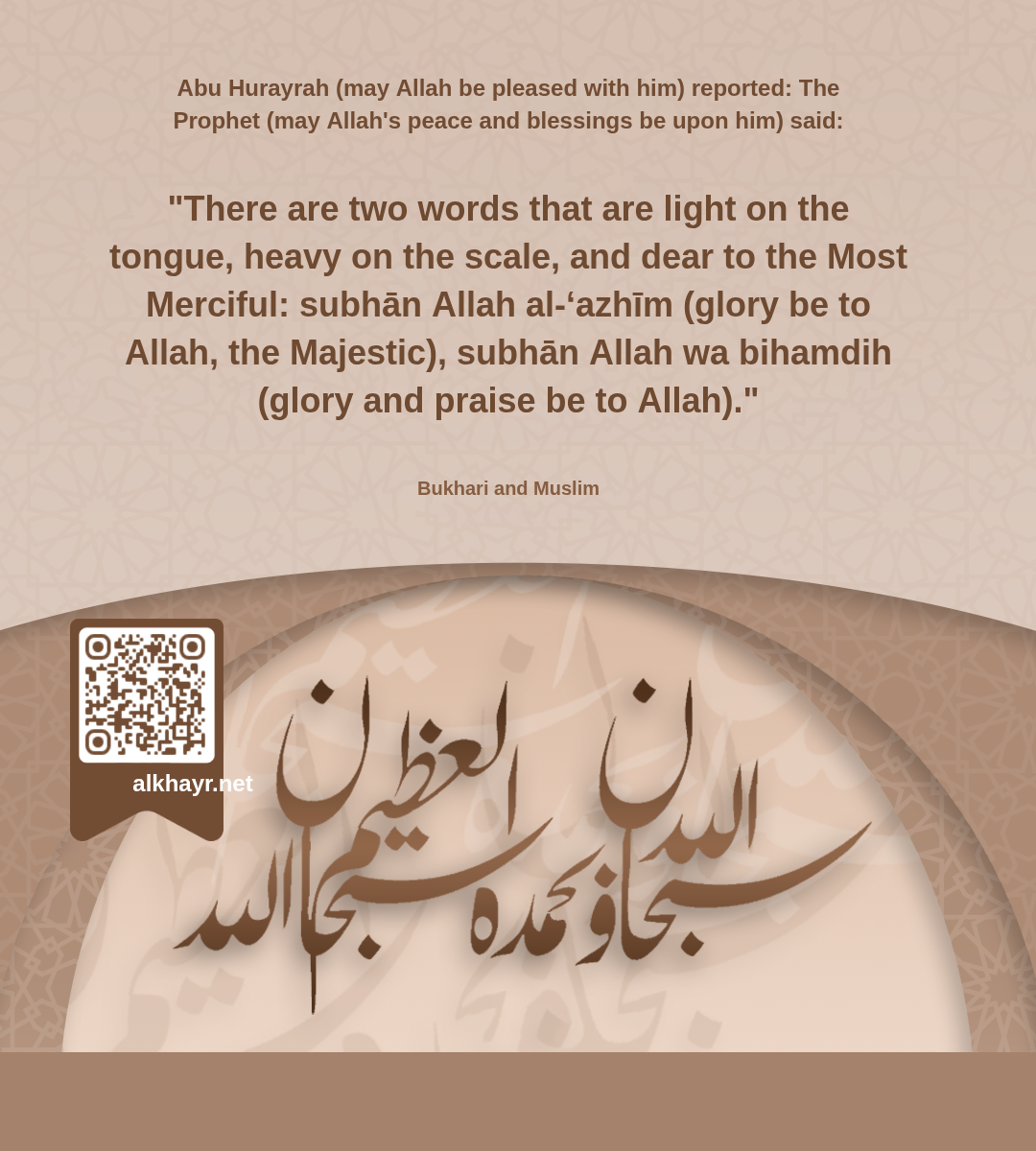
Abu Hurayrah (may Allah be pleased with him) reported: The Prophet (may Allah's peace and blessings be upon him) said: "There are two words that are light on the tongue, heavy on the scale, and dear to the Most Merciful: subhān Allah al-‘azhīm (glory be to Allah, the Majestic), subhān Allah wa bihamdih (glory and praise be to Allah)."
Agreed upon
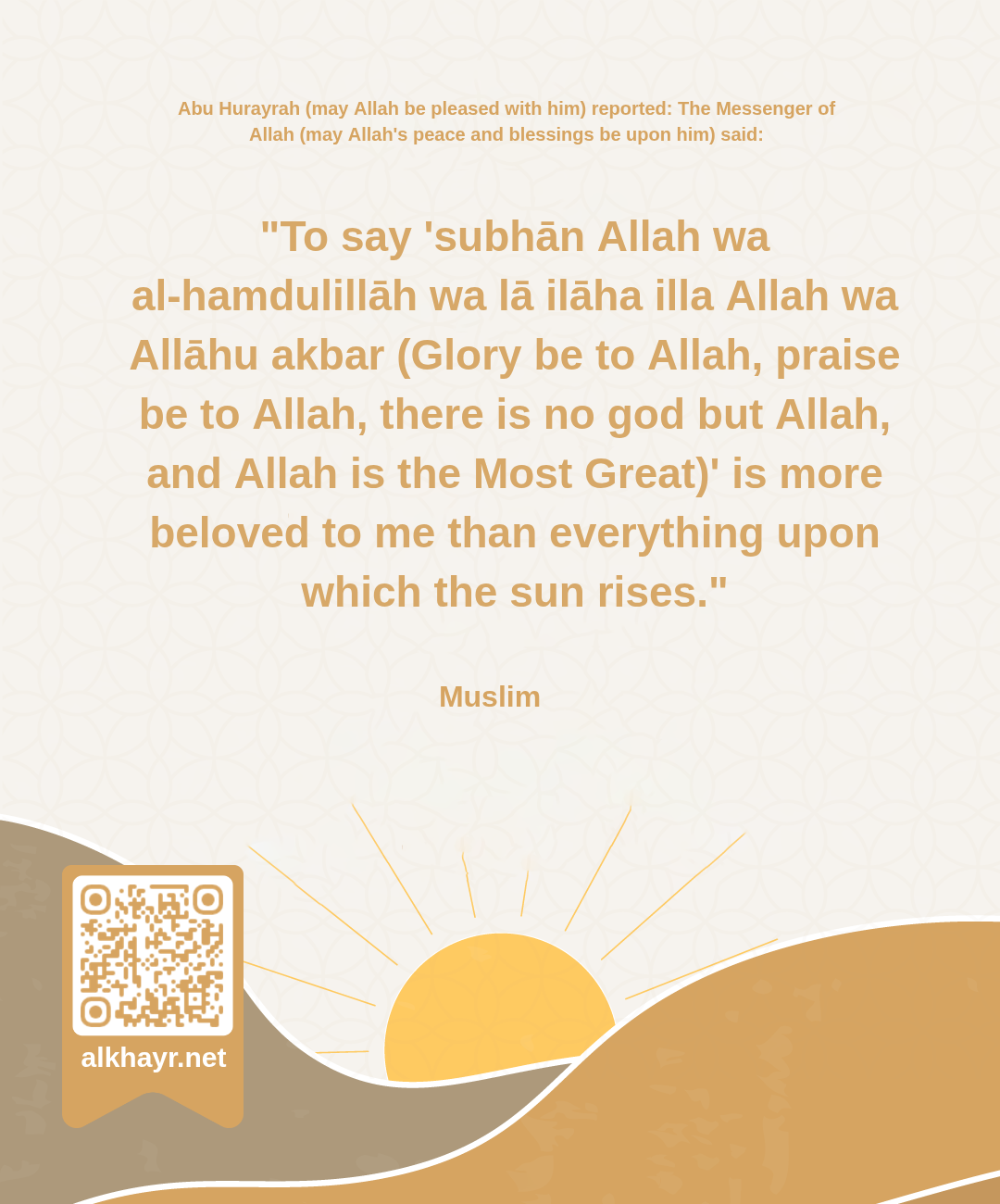
Abu Hurayrah (may Allah be pleased with him) reported: The Messenger of Allah (may Allah's peace and blessings be upon him) said: "To say 'subhān Allah wa al-hamdulillāh wa lā ilāha illa Allah wa Allāhu akbar (Glory be to Allah, praise be to Allah, there is no god but Allah, and Allah is the Most Great)' is more beloved to me than everything upon which the sun rises."
Narrated by Muslim
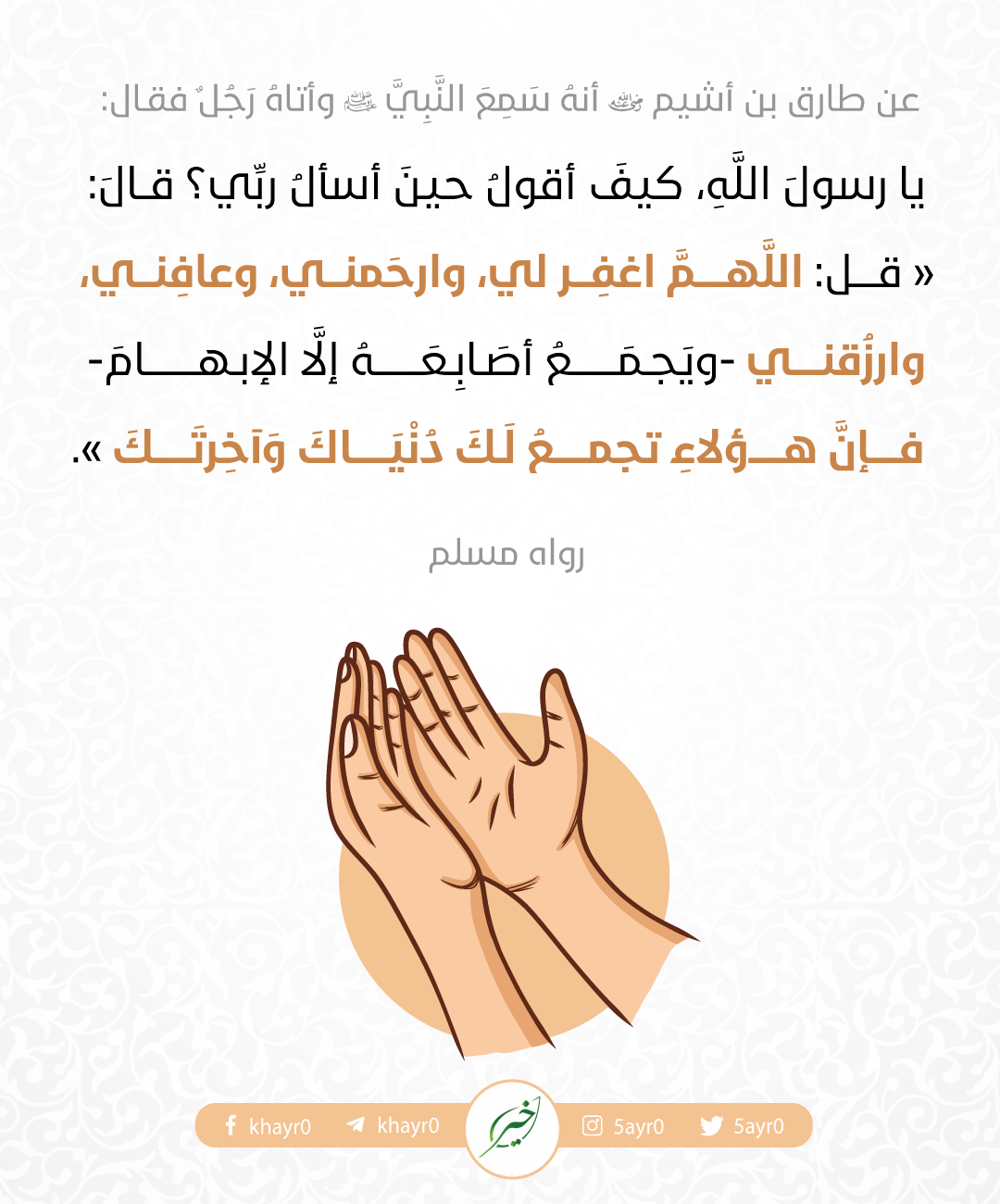
عَنْ أَبِي مَالِكٍ الْأَشْجَعِيُّ عَنْ أَبِيهِ قَالَ: كَانَ الرَّجُلُ إِذَا أَسْلَمَ عَلَّمَهُ النَّبِيُّ صَلَّى اللهُ عَلَيْهِ وَسَلَّمَ الصَّلَاةَ، ثُمَّ أَمَرَهُ أَنْ يَدْعُوَ بِهَؤُلَاءِ الْكَلِمَاتِ: «اللهُمَّ اغْفِرْ لِي وَارْحَمْنِي وَاهْدِنِي وَعَافِنِي وَارْزُقْنِي». وَفِي رِوَايَةٍ: أَنَّهُ سَمِعَ النَّبِيَّ صَلَّى اللهُ عَلَيْهِ وَسَلَّمَ وَأَتَاهُ رَجُلٌ، فَقَالَ: يَا رَسُولَ اللهِ كَيْفَ أَقُولُ حِينَ أَسْأَلُ رَبِّي؟ قَالَ: «قُلْ: اللهُمَّ اغْفِرْ لِي وَارْحَمْنِي وَعَافِنِي وَارْزُقْنِي» وَيَجْمَعُ أَصَابِعَهُ إِلَّا الْإِبْهَامَ «فَإِنَّ هَؤُلَاءِ تَجْمَعُ لَكَ دُنْيَاكَ وَآخِرَتَكَ».
رواه مسلم