EN
Jurisprudence of Acts of Worship
Prayer
126 hadiths
Obligation of Prayer and Ruling on Its Abandoner
5
Virtue of Prayer
10
The Azan and Iqaamah
6
Times Not to Pray
2
Conditions of Prayer
3
Pillars of Prayer
2
Obligatory Acts of Prayer
1
Recommended Acts of Prayer
1
Method of Prayer
10
Dhikr (Invocation) during Prayer
15
Nullifiers of Prayer
1
Mistakes during Prayer
5
Prostration of Forgetfulness, Recitation, Gratitude
4
Virtue and Rulings of Congregational Prayer
7
Rulings of the Imam and Followers in Prayer
4
Prayer of the People with Excuses
1
Jumu‘ah (Friday) Prayer
7
Voluntary Prayer
40
Prayer of the Solar and Lunar Eclipse
2
Rain-Seeking Prayer
1
The rulings of mosques
9
126 hadiths
Abu ’Umāmah (may Allah be pleased with him) reported: The Messenger of Allah (may Allah's peace and blessings be upon him) said: "Whoever recites the Verse of the Kursi right after each obligatory prayer will have nothing preventing him from entering Paradise except that he dies."
Narrated by An-Nasā’i in Al-Kubra
‘Imrān ibn Husayn (may Allah be pleased with him) reported: I was suffering from hemorrhoids (piles); so I asked the Prophet (may Allah's peace and blessings be upon him) about the prayer and he said: "Pray while standing; if you cannot, then while sitting; and if you cannot, then while lying on your side."
Narrated by Al-Bukhāri
‘Ā'ishah (may Allah be pleased with her) reported: One night, the Prophet (may Allah's peace and blessings be upon him) performed Qiyām while reciting a single verse from the Qur'an (over and over again).
Narrated by At-Termedhy
Abu Sa‘īd al-Khudri (may Allah be pleased with him) reported: The Messenger of Allah (may Allah's peace and blessings be upon him) said: "When anyone of you is in doubt about his prayer, not knowing how much he prayed, three or four, let him dispel the doubt and build upon what he is certain about, then perform two prostrations before making Taslīm. If he has prayed five, they will make his prayer even-numbered, and if he has prayed exactly four, they will be humiliation for the devil."
Narrated by Muslim
Abu Rāfi‘ reported that Abu Hurayrah (may Allah be pleased with him) recited Sūrat al-Inshiqāq and then prostrated. After he finished the prostration, he told them that the Messenger of Allah (may Allah’s peace and blessings be upon him) had prostrated when he recited it.
Narrated by Bukhari & Muslim
Abu Bakrah reported: Whenever the Prophet (may Allah's peace and blessings be upon him) received good news, he would fall down in prostration out of gratitude to Allah.
Narrated by Ibn Majah - Narrated by At-Termedhy - Narrated by Abu Daoud - Narrated by Ahmad
Hafsah (may Allah be pleased with her) reported: The Prophet (may Allah's peace and blessings be upon him) used to pray two light Rak‘ahs after the break of dawn. Another narration reads: "before the (Fajr) prayer would start."
Narrated by Bukhari
‘Ā’ishah, Mother of the Believers, (may Allah be pleased with her) reported: The Prophet (may Allah's peace and blessings be upon him) did not ever leave four before Zhuhr and two Rak‘ahs before morning.
Narrated by Al-Bukhāri
’Umm Habībah, the Prophet's wife, (may Allah be pleased with her) reported: I heard the Messenger of Allah (may Allah's peace and blessings be upon him) say: "Whoever regularly observes four Rak‘ahs before Zhuhr and four after it, Allah will make him forbidden to Hellfire."
Narrated by Abu Dāwūd, At-Tirmidhi, An-Nasā’i, Ibn Mājah, and Ahmad
‘Abdullāh ibn ‘Umar (may Allah be pleased with him) reported that the Messenger of Allah (may Allah's peace and blessings be upon him) said: "May Allah have mercy on whoever offers four Rak‘ahs before the ‘Asr prayer."
Narrated by At-Termedhy - Narrated by Abu Daoud - Narrated by Ahmad
‘Abdullāh ibn Mughaffal (may Allah be pleased with him) reported that the Messenger (may Allah's peace and blessings be upon him) said: "Offer two Rak‘ahs before Maghrib." Then he said: "Offer two Rak‘ahs before Maghrib, if you will," fearing people might take it as Sunnah.
Narrated by Bukhari
‘Ā'ishah (may Allah be pleased with her) reported: The Messenger of Allah (may Allah's peace and blessings be upon him) used to pray two light Rak‘ahs before the Fajr prayer, after the Muezzin would finish calling the Adhān and after the break of dawn. Then, he used to lie on his right side until the Muezzin would come to him for the Iqāmah.
Narrated by Bukhari & Muslim
‘Abdullah ibn ‘Umar (may Allah be pleased with him and his father) reported: A man asked the Prophet (ﷺ) while he was on the pulpit: What do you say about the night prayer? He (ﷺ) said: "Two by two (i.e., in sets of two Rak‘ahs). When he fears that dawn is approaching, he should pray one (Rak‘ah), which will make what he has prayed Witr (odd)." And he (ﷺ) used to say: "Make the last of your prayers at night Witr,” for the Prophet (ﷺ) commanded it.
Agreed upon
Ibn ‘Umar (may Allah be pleased with him) reported that the Prophet (may Allah's peace and blessings be upon him) said: "(Voluntary) prayer in both the day and night is performed two by two."
Narrated by Ibn Majah - Narrated by At-Termedhy - An-Nasaa’i - Narrated by Abu Daoud - Narrated by Ahmad
Abu Hurayrah (may Allah be pleased with him) reported that the Messenger of Allah (may Allah's peace and blessings be upon him) said: "The most excellent fast after Ramadan is Allah's month, Muharram, and the most excellent prayer after what is prescribed is prayer during the night."
Narrated by Muslim
Abu Ayyūb al-Ansāri (may Allah be pleased with him) reported that the Prophet (may Allah's peace and blessings be upon him) said: "The Witr is due, so whoever wants to pray the Witr as seven (units of prayer), let him do so; whoever wants to pray the Witr as five, let him do so; whoever wants to pray the Witr as three, let him do so; and whoever wants to pray the Witr as one, let him do so."
Narrated by Ibn Majah - An-Nasaa’i - Narrated by Abu Daoud
‘Ali (may Allah be pleased with him) said: "Witr is not incumbent like the status of the obligatory prayers, but it is a Sunnah that the Messenger of Allah (may Allah's peace and blessings be upon him) started practicing."
Narrated by Ibn Majah - Narrated by At-Termedhy - An-Nasaa’i - Narrated by Ahmad
‘Ā'ishah (may Allah be pleased with her) reported: The Prophet (may Allah's peace and blessings be upon him) used to offer thirteen Rak‘ahs in the night prayer including Witr, plus two (voluntary) Rak‘ahs of the Fajr prayer.
Narrated by Bukhari & Muslim
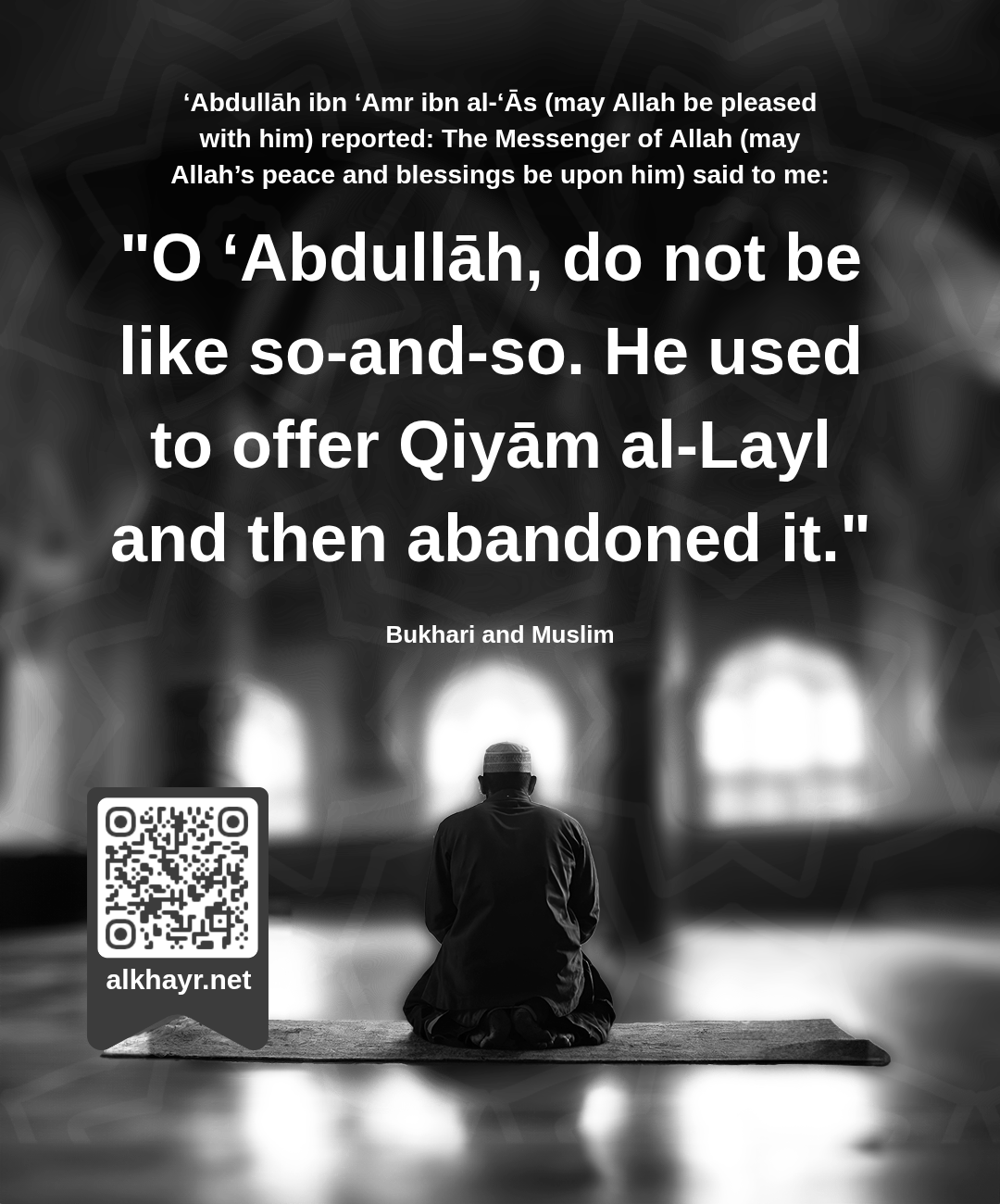
‘Abdullāh ibn ‘Amr ibn al-‘Ās (may Allah be pleased with him) reported: The Messenger of Allah (may Allah’s peace and blessings be upon him) said to me: "O ‘Abdullāh, do not be like so-and-so. He used to offer Qiyām al-Layl and then abandoned it."
Narrated by Bukhari & Muslim
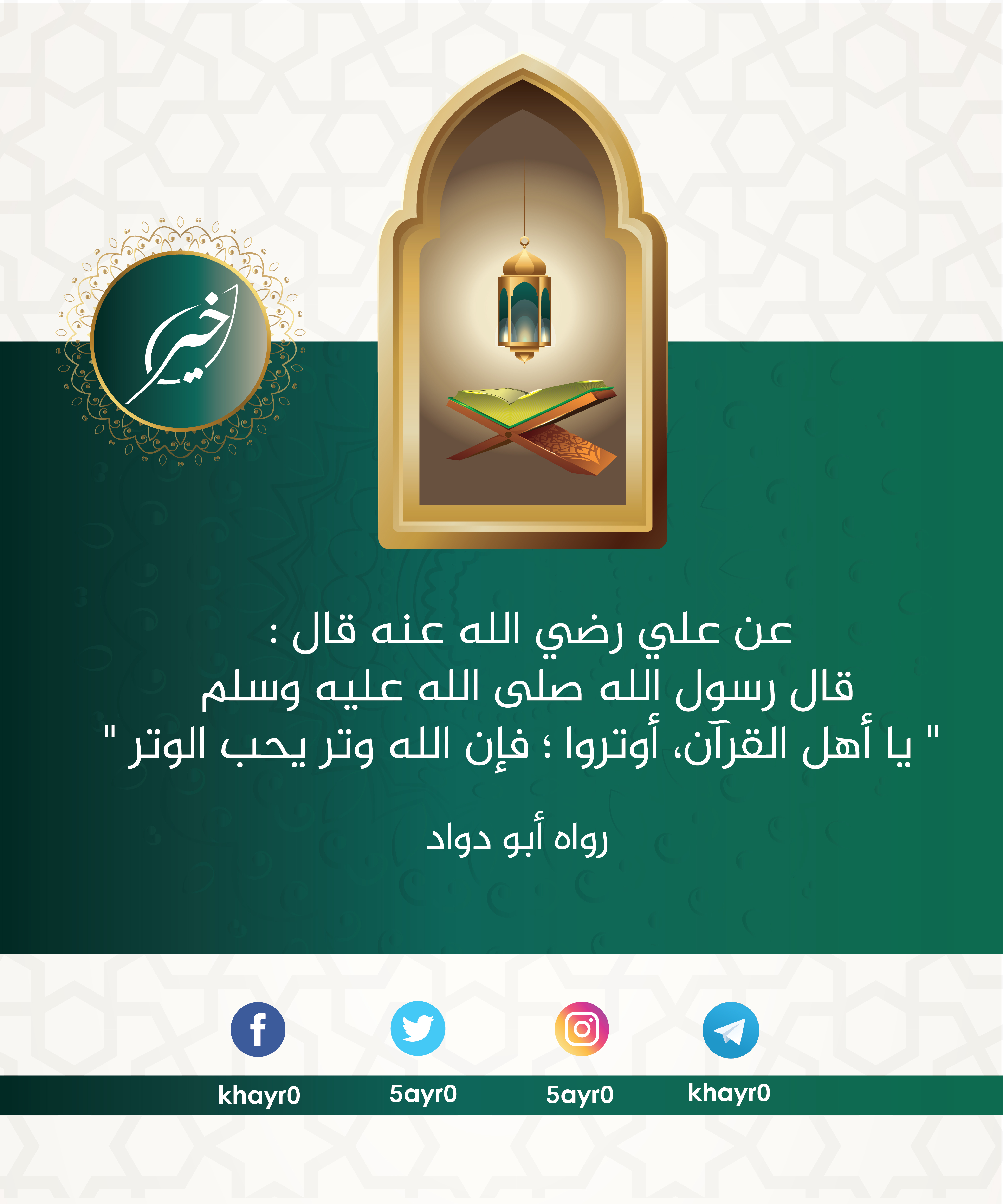
‘Ali (may Allah be pleased with him) reported: The Messenger of Allah (may Allah's peace and blessings be upon him) said: "O people of the Qur'an, perform the Witr Prayer for, verily, Allah is Witr (single) and loves what is Witr (single, odd)."
Narrated by Ibn Majah - Narrated by At-Termedhy - An-Nasaa’i - Narrated by Abu Daoud - Narrated by Ahmad
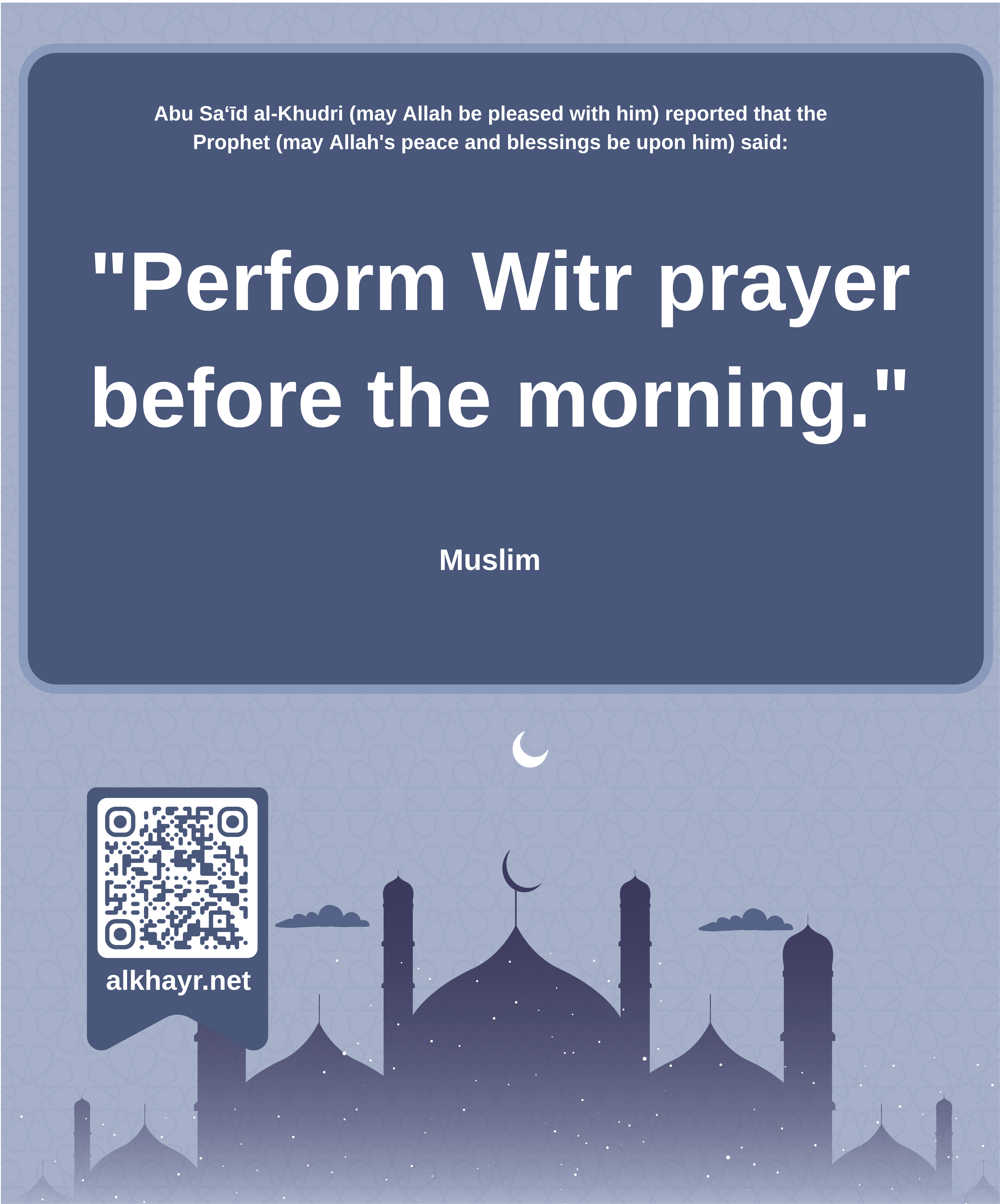
Abu Sa‘īd al-Khudri (may Allah be pleased with him) reported that the Prophet (may Allah's peace and blessings be upon him) said: "Perform Witr prayer before the morning."
Narrated by Muslim
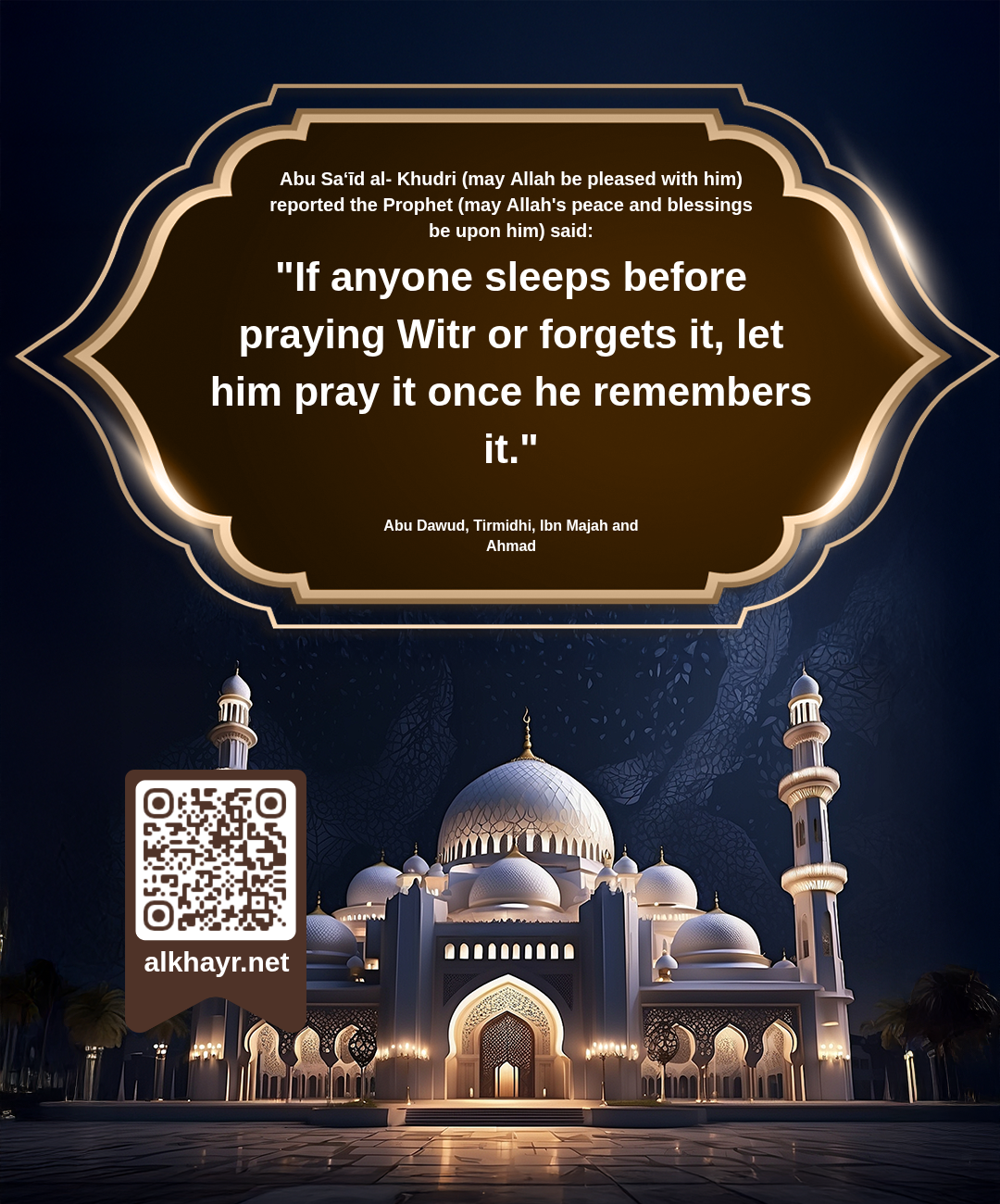
Abu Sa‘īd al-Khudri (may Allah be pleased with him) reported the Prophet (may Allah's peace and blessings be upon him) said: "If anyone sleeps before praying Witr or forgets it, let him pray it once he remembers it."
Narrated by Ibn Majah - Narrated by At-Termedhy - Narrated by Abu Daoud - Narrated by Ahmad
Jābir (may Allah be pleased with him) reported that the Messenger of Allah (may Allah's peace and blessings be upon him) said: "If anyone fears that he will not wake up at the end of the night, let him offer Witr prayer at the beginning of the night; and anyone expects to wake up at the end of the night, let him offer Witr prayer at the end of the night. Indeed, prayer at the end of the night is witnessed (by the angels) and that is better."
Narrated by Muslim
‘Ā'ishah (may Allah be pleased with her) reported: The Messenger of Allah (may Allah's peace and blessings be upon him) used to offer the Duha Prayer as four Rak‘ahs and sometimes as much more as Allah willed.
Narrated by Muslim
Previous page
Page 4 of 6
Next page