PrayerMethod of Prayer
10 hadiths
10 hadiths
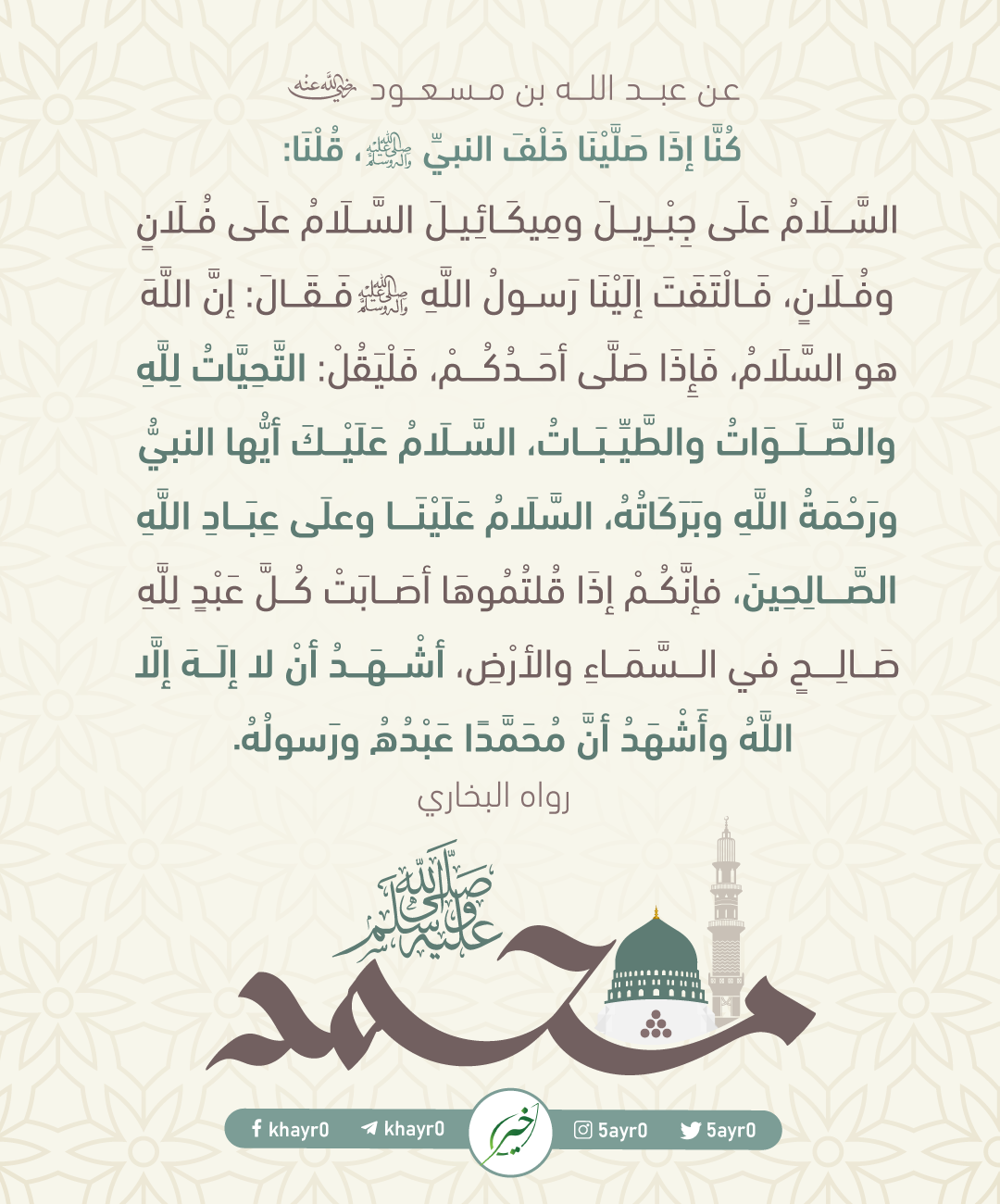 Ibn Mas‘ūd (may Allah be pleased with him) reported: The Messenger of Allah (may Allah's peace and blessings be upon him) taught me the Tashahhud, with my hand between his two hands, as he would teach me a Surah from the Qur’an: "At-tahiyyātu lillāhi was-salawātu wat-tayyibātu as-Salāmu ‘alayka ayyuha an-nabiyyu wa rahmatullāhi wa barakātuh, as-salāmu ‘alayna wa ‘ala ‘ibādillāhi as-sālihīn, ash-hadu alla ilāha illallāh wa ash-hadu anna Muhammadan ‘abduhu wa rasūluh (Greetings, prayers, and good things are due to Allah. May the peace, mercy, and blessings of Allah be upon you, O Prophet. Peace be upon us and upon the righteous slaves of Allah. I bear witness that there is no god but Allah, and I bear witness that Muhammad is His slave and Messenger)." Another wording reads: "Verily, Allah is the Giver of Peace, so when any of you sits in prayer, let him say: 'At-tahiyyātu lillāhi was-salawātu wat-tayyibātu as-salāmu ‘alayka ayyuha an-nabiyyu wa rahmatullāhi wa barakātuh, as-salāmu ‘alayna wa ‘ala ‘ibādillāhi as-sālihīn (Greetings, prayers, and good things are due to Allah. May the peace, mercy, and blessings of Allah be upon you, O Prophet. Peace be upon us and upon the righteous slaves of Allah).' If you say this, it will benefit every righteous slave of Allah in heaven and on earth. (Then, say:) 'Ash-hadu alla ilāha illallāh wa ash-hadu anna Muhammadan ‘abduhu wa rasūluh (I bear witness that there is no god but Allah, and I bear witness that Muhammad is His slave and Messenger).' Then, let him choose whatever supplication he would like."Agreed upon
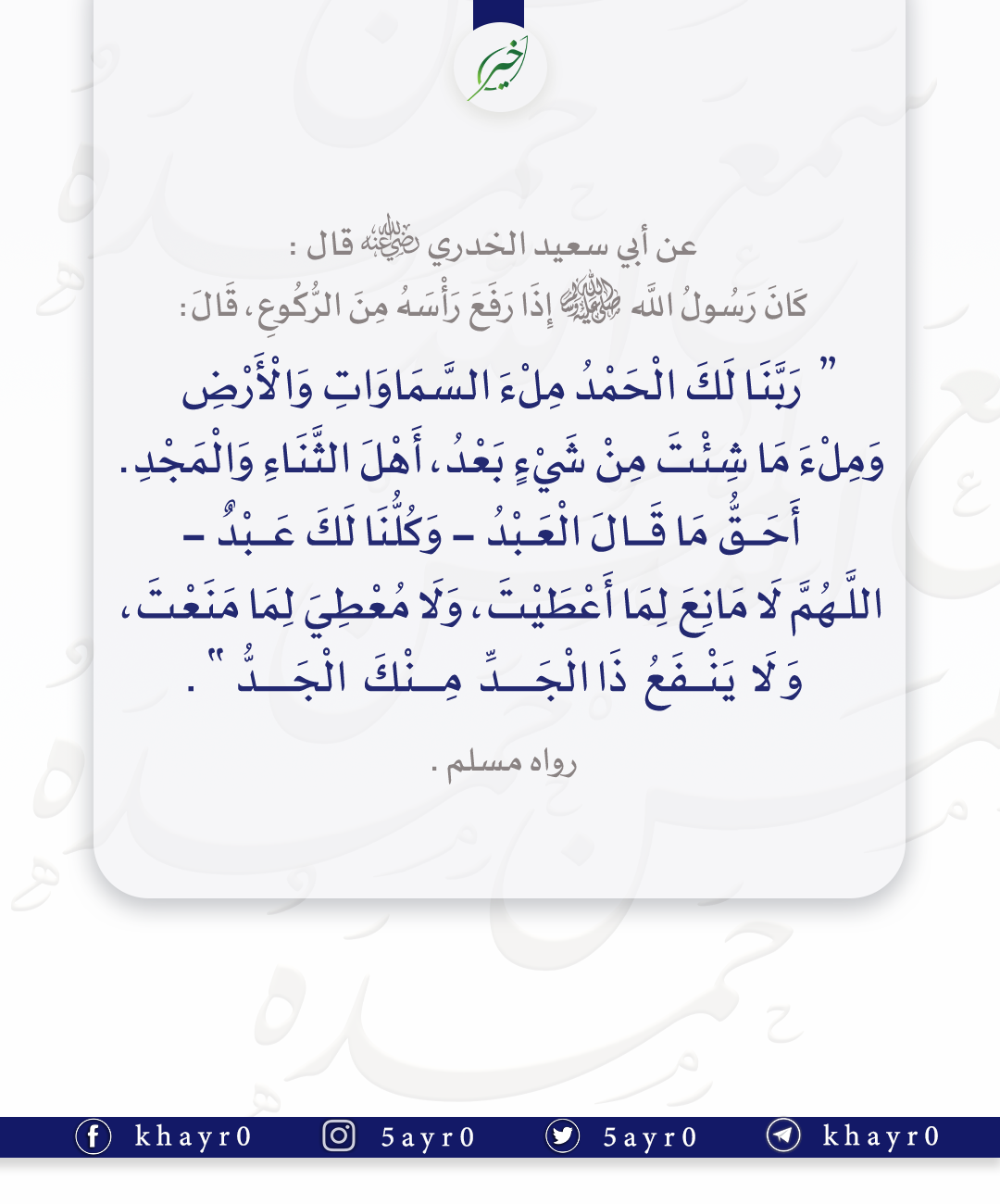
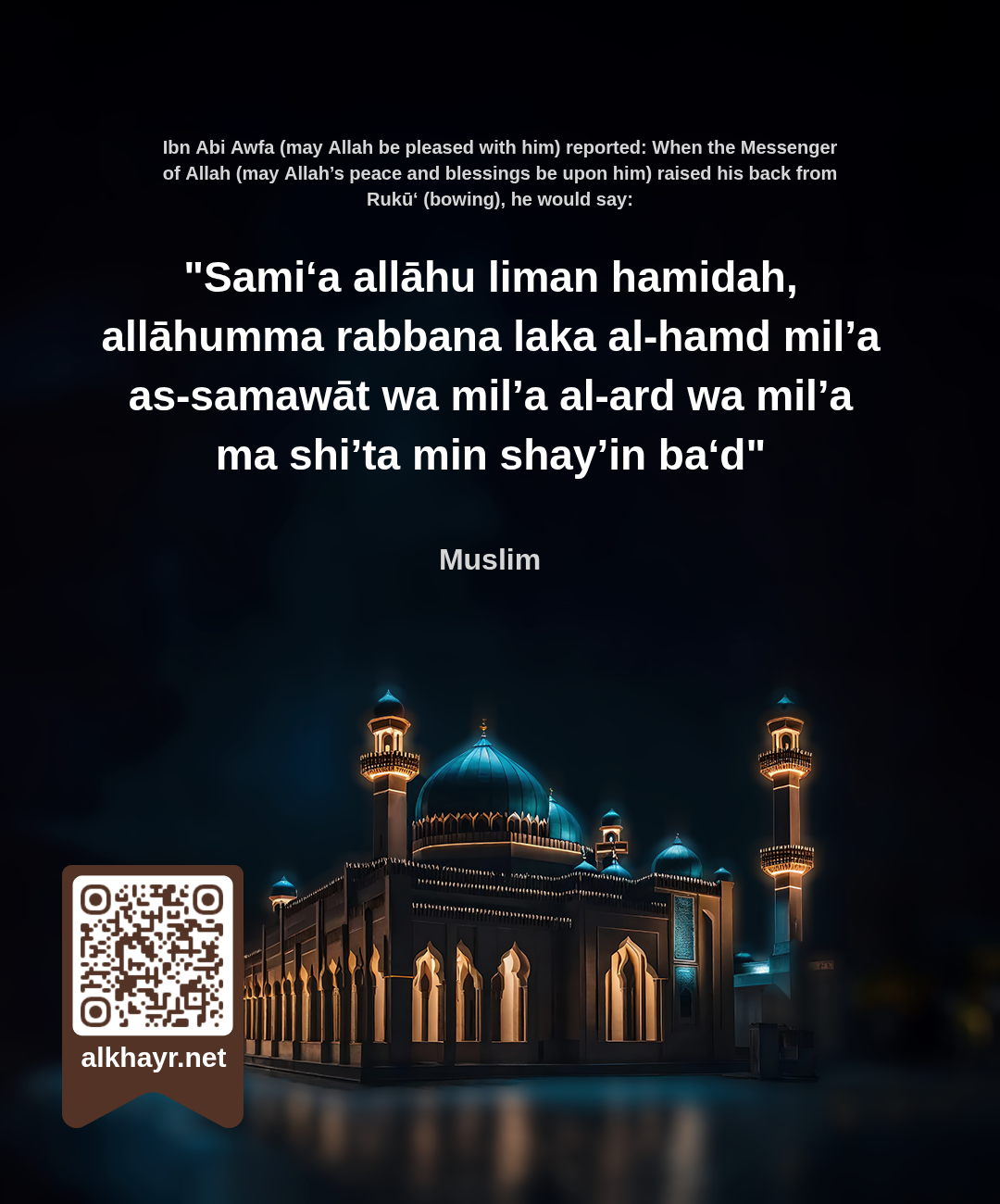
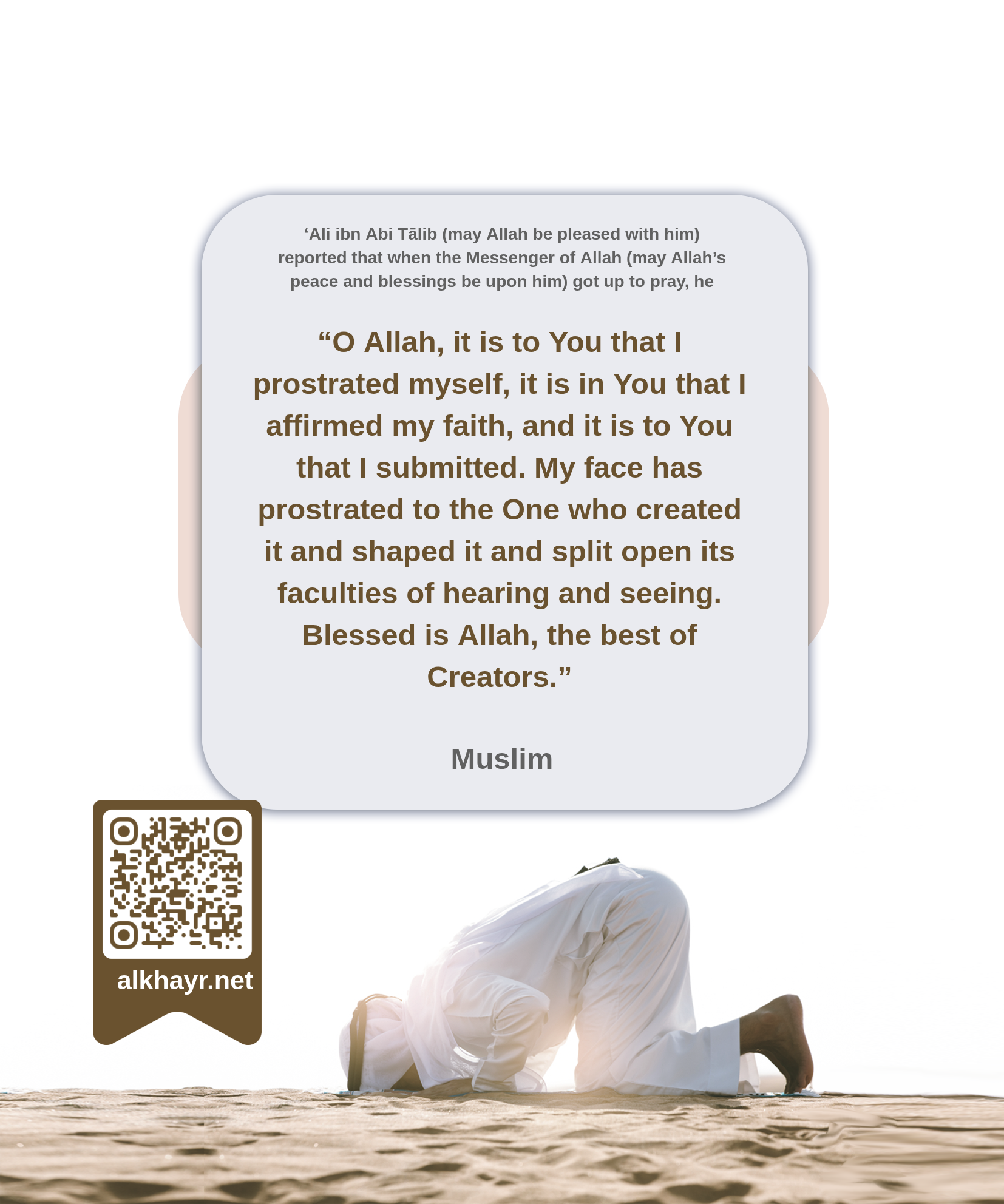 ‘Ali ibn Abi Tālib (may Allah be pleased with him) reported that when the Messenger of Allah (may Allah’s peace and blessings be upon him) got up to pray, he would say: “I have turned my face in complete devotion to the One Who created the heavens and the earth, and I am not one of the polytheists. Verily my prayer, my sacrifice, my life and my death are for Allah, the Lord of the worlds; there is no partner with Him and this is what I have been commanded (to profess and believe) and I am of the Muslims. O Allah, You are the Sovereign, there is no god but You. You are my Lord and I am Your slave. I have wronged myself and I have admitted my sin, so forgive all my sins, for no one forgives sins but You. Guide me to the best of morals for none can guide to them but You, and deliver me from the worst of morals for none can deliver me from them but You. Here I am, in answer to Your call, happy to serve You. All good is within Your hands and evil does not stem from You. I exist by You and I turn to You. Blessed and Exalted. I seek Your forgiveness and repent to You.” When he bowed, he would say: “O Allah, it is for You that I bowed, it is in You that I believed, and it is to You that I submitted. Humbled to You are my hearing, my eyesight, my mind, my bones, and my tendons.” When he rose from bowing, he would say: “O Allah, our Lord, praise is due to You, (praise) that fills the heavens and the earth, that fills what exists between them, and that fills anything You desire afterward.” When he prostrated himself, he would say: “O Allah, it is to You that I prostrated myself, it is in You that I affirmed my faith, and it is to You that I submitted. My face has prostrated to the One who created it and shaped it and split open its faculties of hearing and seeing. Blessed is Allah, the best of Creators.” Then, one of the last things he would say between the Tashahhud and Taslīm is: “O Allah, forgive my past and future sins, my hidden and apparent sins, my transgression, and the sins that You know of more than I do. You are the One who puts forward and the One who holds back. There is no god but You.”Narrated by Muslim